5-Star (Not Fake) Online Reputation Management for Health Practitioners (Without Feeling Salesy)
You can do great work in your clinic, get real results, and still get that one review that makes you stare at your screen and mutter, “What even happened here?” That’s exactly why online reputation management for health practitioners matters, even if marketing isn’t your favorite job.
The good news is you don’t need to become a full-time content creator or plaster yourself across every platform. You just need the basics to be accurate, human, and easy to trust, so a random odd review doesn’t become the main story prospective patients see when they look you up.
Why your online reputation matters more than you think
People don’t choose a health practitioner like they choose a toaster. Your work is personal. It requires trust, and most people want a sense of you before they ever book.
That’s the real point here: trust over price.
When prospective patients search your name, your clinic name, or a service you offer, they start forming an opinion right away. They’re not only scanning for credentials. They’re also checking whether you seem real, safe, and easy to deal with. If your listings are confusing, outdated, or missing key details, you can lose someone before they even call.
On the other hand, you don’t need to be “perfect online” to come across well. A good enough presence still wins when it’s clear, accurate, and human. You can sound like yourself. You can keep it simple. You can skip the salesy vibe.
A strong baseline online presence helps you:
And yes, sometimes a negative online review isn’t really about you. As the saying goes, “…people know that sometimes people have a bad day, leave a bad review…” If you’ve ever left a grumpy review after a long day, you already understand how this happens.
So the goal isn’t to control people. It’s to reduce avoidable friction and make sure your best, most accurate information is what shows up first.

What online reputation management actually means (in plain language)
Online reputation management, specifically healthcare provider reputation management, is simply you guiding what appears when someone searches for your name, your clinic, and your services.
There are three main parts to it:
- What’s said about you: reviews and comments on online review sites. You can’t control these fully, but you can respond well and report obvious problems.
- What you publish: your site, your profiles, your photos, your updates. This is where you have the most control.
- What Google understands: accuracy and consistency across the information you publish, so search engines connect the dots properly.
If you only focus on one thing, focus on what you publish. It’s the most reliable way to shape your online presence without feeling like you’re constantly “performing” online.
Think of it like healthcare practice signage. You can’t control what someone tells their friend about their experience, but you can control whether your sign is clear, your door is easy to find, and your opening hours are correct.
Fix the basics first: profiles, details, and consistency
Claim and update the profiles people actually use
Start by finding where you show up online, then claim and update those profiles. Your “main profiles” are the ones that tend to appear on page one of search results, especially on mobile.
A sensible starting list:
Your job here is not to chase every directory on earth. I did set up my Google Business Profile but I didn’t around to Bing Places or Yelp, because I knew my clients weren’t browsing those. Your job is to identify the ones your clients will realistically see, then make sure they’re correct.
Lock down NAP details so you look like one clear business
NAP stands for Name, Address, Phone. Your aim is boring consistency!
If your clinic name is written one way in one place and slightly differently somewhere else, Google may treat them like separate businesses. It can also make you look a bit scattered, even if your actual clinical work is excellent.
Make these match everywhere:
This is one of those small tasks that pays you back through search engine optimization. It helps Google connect your listings, improves your search results, and builds simple trust for the person comparing options.

Add practical details that prevent avoidable frustration
Some bad reviews are really “confusion reviews.” The person couldn’t find you. They didn’t know where to park. They weren’t sure which door to use. They arrived stressed and it colored the whole visit.
You can head a lot of that off by adding a few helpful details:
- Real photos: you, your clinic room, the front door, and signage (so people know they’re in the right place).
- Clinic hours: accurate and updated, including holiday changes.
- Booking link: one obvious path to book.
- Accessibility notes: stairs, lift access, anything people need to know.
- Parking notes: where to park, paid or free, what to watch for.
Simple fixes take time but they’re a high priority. You’re not doing this to look flashy. You’re doing it to reduce friction and make arrival feel calmer.
I had clients tell me they had driven over on a recce visit and knew they were at the right place because they could recognise it from my photos. That gave them so much more confidence when they actually attended for the appointment and they settled quicker to telling me about their health issues.
Set clear expectations so clients know what to expect
Clear expectations are part of good care, enhancing the patient experience and patient satisfaction. They also protect your reputation, because patients are less likely to feel confused or disappointed.
Describe your scope in everyday language (and stay within it)
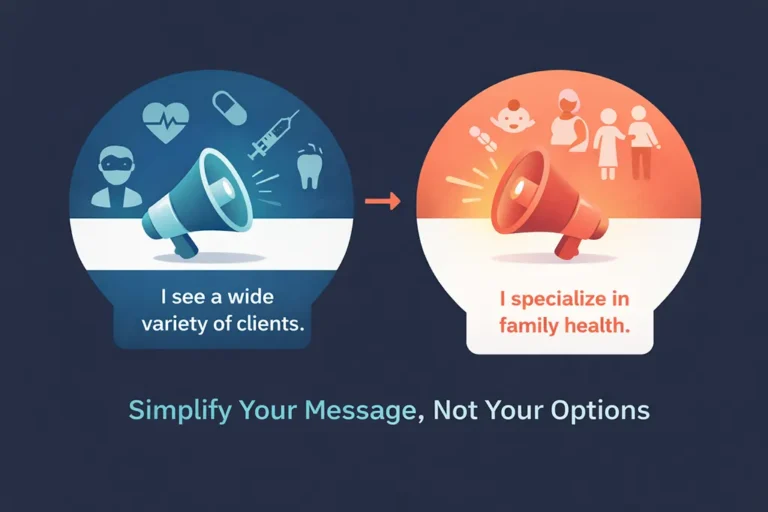
Write what you treat in plain terms. Avoid vague phrases that could mean anything. At the same time, be careful about what you claim, especially if your profession has rules about advertising or health claims (and most do).
A safe approach is to describe what you do in terms of:
If you’re not sure about a claim, leave it out. Avoid over-claiming to prevent issues. You can still be clear without making big promises. Your regulatory authority or governing body can usually steer you in the right direction for safe wording.
The British Acupuncture Council were my touchstone for checking what I could and could not say about my treatments.
Explain what a first visit looks like
A first visit can feel unfamiliar for patients, even when they’re excited to get help. A short description reduces anxiety and cuts down on misunderstandings.
Consider adding a brief “here’s how it works” section that covers:
This doesn’t need to be a long essay. A few clear sentences often do the job, and they can save you from negative patient feedback or a review that’s really about unmet expectations.

How to get more reviews ethically, without feeling awkward
Ask at the moment it makes sense
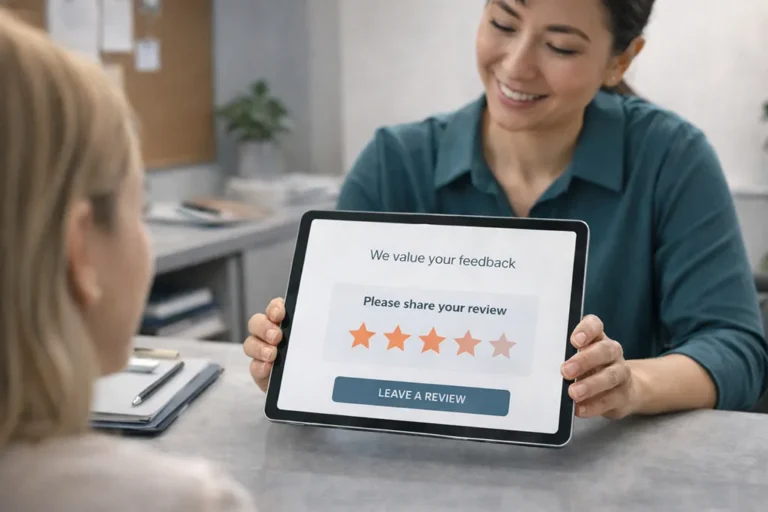
The best time to ask for patient reviews is when it feels natural, not when you’ve hyped yourself up to “do marketing.”
Good moments include:
Keep it easy. One link, one sentence, one option.
You can use wording like: “If you feel comfortable, here’s a link to leave a Google review.”
In healthcare, people often don’t want to share personal details publicly (fair enough). You can guide them toward patient reviews of the general experience instead:
This approach naturally encourages positive online reviews.
My client group were not heavy internet users so I used to tack on “or tell a friend” to the review request I mention above. I got many more clients through word of mouth, so not everything has to be online.
Skip gifts and discounts, even if it sounds tempting
Don’t offer gifts or discounts for reviews. It gets messy fast, some platforms don’t allow it and you don’t want to be accused of fake reviews or deceptive practices. You’re aiming for steady, honest review generation, not a bargaining situation.
If you want a simple rule: ask naturally, ask occasionally, and make it easy. This builds authentic positive online reviews over time.
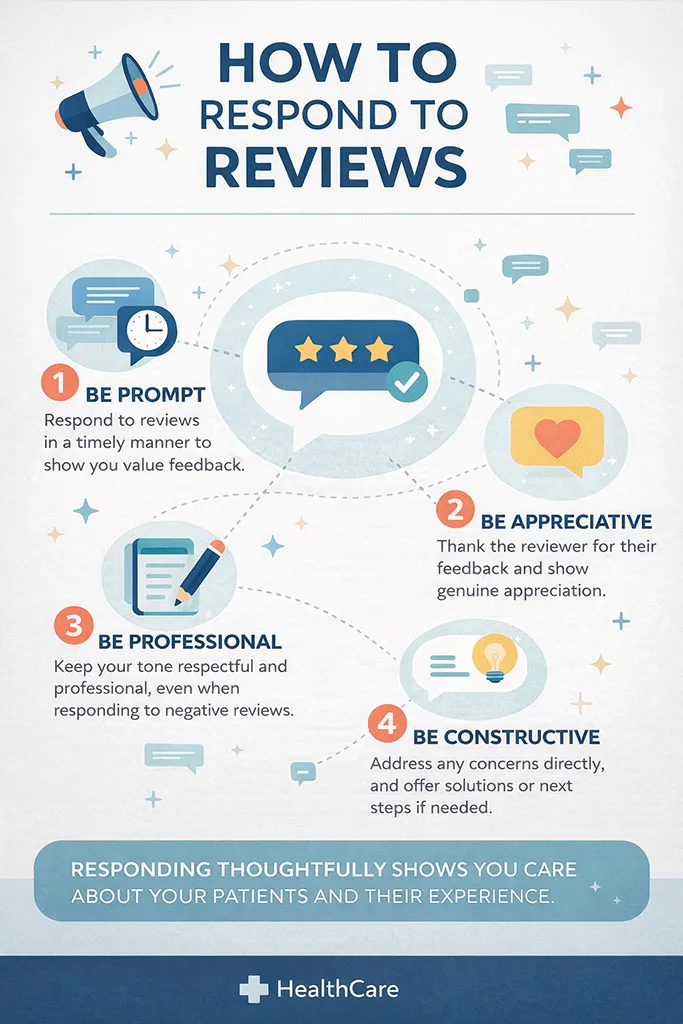
How to respond to reviews (without turning it into a drama)
Responding well to reviews is part of online reputation management for health professionals, but it needs a light touch. You’re showing future clients how you handle patient feedback.
Positive reviews: warm, brief, and human
A good reply to a positive review is short and kind. Thank them, and maybe reflect a value you care about, without mentioning any health details.
For example, you can say you’re glad they felt comfortable in the clinic. That’s enough. You don’t need a paragraph.
Neutral or negative online reviews: acknowledge, offer a fix, take it offline
If a negative online review seems genuine (even if you don’t love it), your goal is to:
You also need to protect privacy for HIPAA or GDPR compliance. Don’t confirm they’re a patient. Don’t discuss care details. Don’t argue point-by-point.
A simple template you can adapt:
“Thanks for your feedback. I can’t discuss care details here. I’d like to understand what happened. Please contact me via email or phone so I can help.”
That’s calm, respectful, and private. It also signals to future clients that you take concerns seriously.
When you shouldn’t respond at all
Sometimes a reply gives a bad review more oxygen than it deserves.
If it’s obvious spam, a threat, or an unrelated rant, report fake patient reviews first. If the review is on your own website and you control it, you may be able to delete it (think carefully, because it can look odd if only the glowing reviews remain). If it’s on online review sites or someone else’s platform, report it and request an investigation.
If you’ve heard colleagues in your field dealing with similar fake reviews, that’s another clue it’s worth reporting rather than engaging.
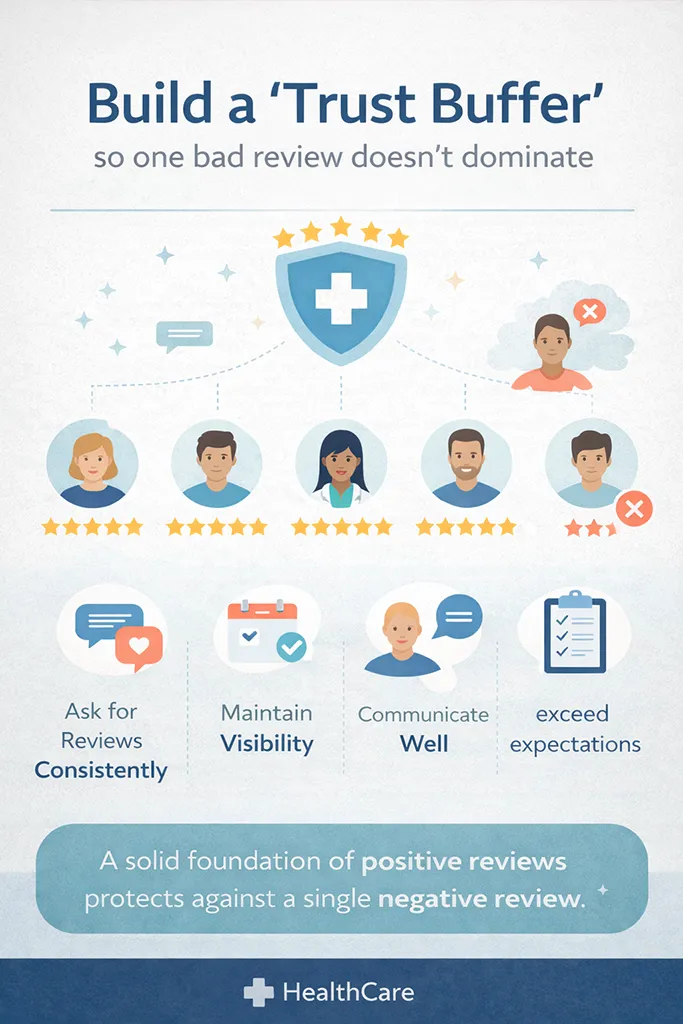
Build a “trust buffer” so one bad review doesn’t dominate
A trust buffer is what protects your five-star ratings when something weird pops up. It’s not about posting every day. It’s about adding small, useful content to your social media profiles that matches what real clients ask.
Share the basics clients always want to know
You already answer these questions in person. Putting them online helps people feel safe before they arrive:
This also signals that you’re active and up-to-date, enhancing the patient experience, which helps both humans and search engines trust what they’re seeing.
Add a short FAQ to reduce friction
A short FAQ section can quietly prevent complaints, because it answers issues before they turn into frustration. Keep it brief and practical to strengthen your online presence.
Here are a few common topics that tend to reduce back-and-forth:
|
FAQ topic |
What to clarify in 1 to 2 sentences |
|---|---|
|
Pricing range |
A simple range or starting price, plus what affects cost |
|
Cancellations |
Notice required and any fees (plain language) |
|
Insurance receipts |
Whether you provide them, and what clients should bring |
|
Treatment length |
Typical session length and whether first visits differ |
You’re not trying to write a legal document. You’re trying to set expectations so people feel informed.
Keep a light “photo habit” going
Fresh photos help people feel comfortable, and they help listings look active. Once a month is plenty.
Add a few new photos now and then:
It’s basic, but it works. People want to know they’ll find you, and that the place looks like a real clinic.
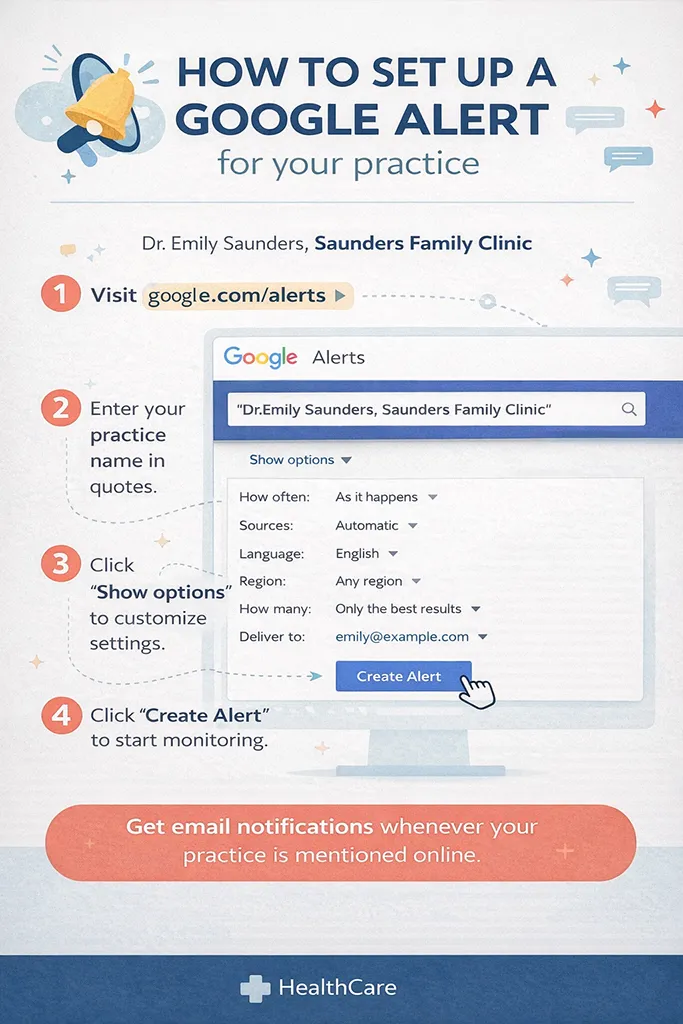
Monitor what matters, and catch issues early
You don’t need to track everything. With review monitoring, track what helps you respond early and improve real client experience.
A simple setup:
In time you may want to add reputation management software (but this is entirely optional), to give you automated insights.
Then focus on a few signals:
A practical habit is to screenshot your top search results once a month. That way, you can compare what’s changing without guessing.
If you get a suspect fake review, document it. Screenshot it, report it through the platform, and keep any public reply calm and privacy-safe (or don’t reply if it’s clear spam). If it points to a real service issue in patient feedback, fix the issue first, then respond briefly in public.
A simple routine to keep your reputation in good shape
These reputation management strategies don’t need a big plan. You need a small rhythm you can actually keep.
Weekly
That’s it. A quick look is often enough to catch problems early.
Monthly
If you’re booking out, you can also add a simple note about how far ahead appointments are running. It saves annoyed messages and sets expectations.
Quarterly
This keeps your online presence accurate and recognizably human, which is the whole goal.
Next steps to protect your 5-star reputation (the real kind)
Pick one action you can do this week: update your main profiles, tighten your NAP details, or add the practical info that stops confusion. Then set a small check-in routine so your online reputation management doesn’t turn into a once-a-year scramble. One steady trickle of clear information beats big bursts of effort. Start your online reputation management program today to maintain visible excellence that prospective clients will notice. What’s the one detail your patients ask about most often in patient reviews that isn’t explained clearly online yet?
Please Share
Have you got a question that I haven’t answered here? Drop it in the comments. This space is for sharing, not just reading. Sometimes the best advice comes from those who’ve been in the same shoes.
Let’s build a supportive community where no one has to figure it all out alone. And if this helped you today, consider passing it on to a colleague who might need it – a little support goes a long way.
Please pin one of these images to your main business tips board