Clinic Boundaries: The Quiet Strategy That Protects Your Time and Income
If you are a healthcare practitioner running a solo clinic, you already know the work doesn’t stop when the last client leaves. Messages come in, “quick questions” stack up, and it gets tempting to reply whenever you have a minute.
That’s where clinic boundaries come in. Not as a way to be distant or strict, but as a way to keep your care steady and your clinic predictable. The goal is simple: protect your time, your energy, and your income, while still being warm and professional with clients.
This post walks through why boundaries matter, what they really are (and aren’t), and three practical ones you can put in place right away, without turning your clinic into a rule-book.
Why boundaries matter in a solo clinic
When work spills into the rest of life
Without clear boundaries, work has a way of spreading into the rest of your life and disrupting work-life balance. You might start answering a client’s message at 9:30 PM while you’re eating dinner, just because you saw it and it felt easier to deal with now than later.
The problem is that one reply can quietly train people what to expect from you. If you respond once outside your usual hours, a client can assume that’s normal, leading to boundary crossings. From their side, it feels reasonable.
Establishing boundaries can feel extra hard in solo practice because you’re not just the clinician. You’re also the receptionist, the admin person, the cleaner, the marketing department, and tech support. On top of that, healthcare attracts helpers, people who genuinely want to be there for others. Add money pressure, and it can feel safer to say yes to everything, even when that “yes” costs you sleep.
A few common ways boundary problems show up:
Boundaries are what keep your clinic from taking over every open space in your day.
What boundaries are (and what they’re not)
Clear rules for access, time, and expectations
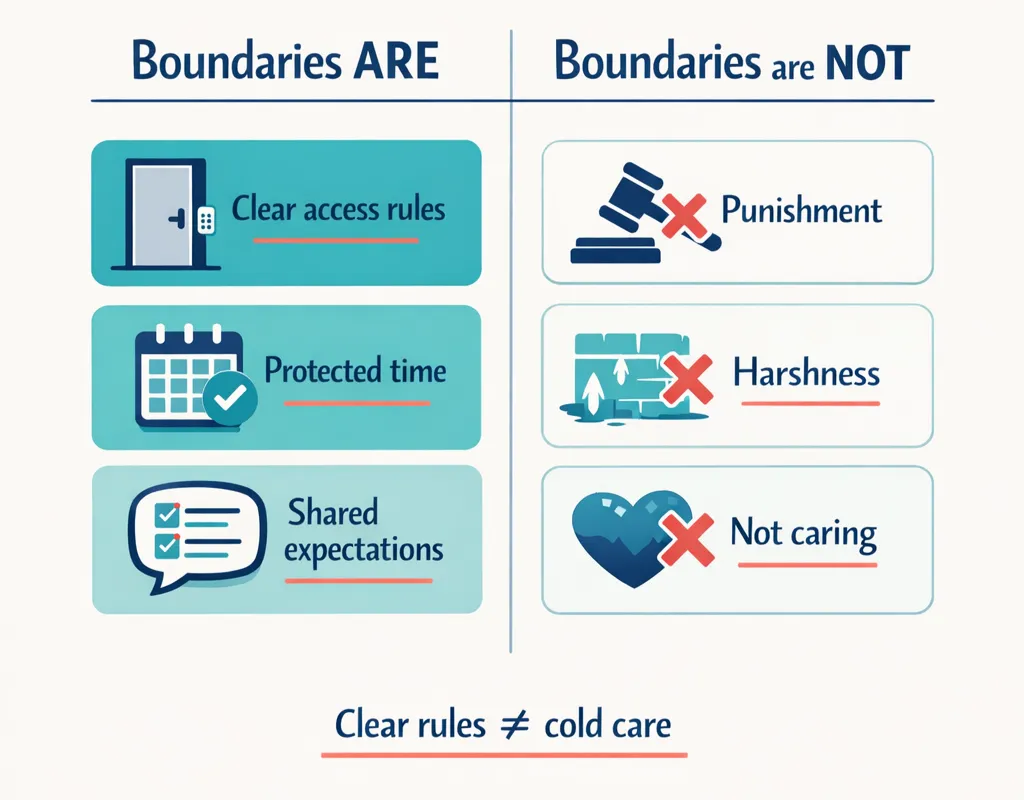
In clinic terms, professional boundaries are simply clear rules for access, time, and expectations. They tell clients how to contact you, when you reply, what happens if they cancel late, and what needs a booked appointment.
Boundaries are not about punishment, harshness, or not caring.
They’re about making your care sustainable through limits like time boundaries, physical boundaries, and emotional boundaries, so you can keep showing up and doing good work. They protect the quality of your attention in the room, and they help clients know what to expect.
This post focuses on boundaries with clients, but it’s worth remembering there are other boundaries too, like the ones you set with your family and friends and even the ones you set for yourself.
How boundaries protect your clinic business
Your time, your revenue, and the next client
Your schedule is not just a calendar in your clinical practice; it’s how your clinic earns money. When client communication interrupts your day, it doesn’t just affect that moment. It can throw off the next appointment, delay notes, or push admin into the evening.
Clear boundaries protect your time in your clinical practice, which protects your revenue. They also protect the next client coming in, because you’re not starting their session rushed.
Boundaries also cut down on the “death by a thousand messages” effect. When you don’t have rules around contact, clients fill the gap with check-ins, follow-ups, and quick clarifications. Each one takes a small slice of time and focus.

Your energy and your ability to be present
It’s hard to deliver quality patient care in clinical settings when you’re half-watching your phone for incoming messages. Even if you don’t reply, the alert alone can pull your attention away from the person in front of you.
Boundaries protect your energy by reducing constant interruption. They help you stay present in sessions, and they stop your day turning into a string of reactions.
They also help you avoid making decisions when you’re tired. That’s when you’re more likely to agree to something you regret later, like squeezing in extra work you didn’t really have space for.
Less admin noise and a more predictable clinic
When boundaries are clear and repeated, you get fewer back-and-forth messages and fewer “just checking” emails. The clinic becomes easier to run because it’s more predictable.
Predictability matters if you want a clinic that supports you long-term. It’s also the foundation for growth, because systems work best when they’re consistent. If you’re building that kind of structure, a simple business plan for solo health practices can help you decide what you’re protecting, and why.
A few business outcomes that often improve when boundaries are clear:

How boundaries help clients feel cared for
Consistency creates safety and trust
Boundaries don’t just protect you. They protect clients too, in ways that are easy to miss.
When clients know what happens next, they can relax. When policies are clear, money conversations feel less awkward. When communication has a structure, clients don’t have to guess how to reach you or wonder if they’re being “too much.” Consistent policies like these strengthen the therapeutic relationship by creating a safe environment where clients feel secure.
Here’s what boundaries quietly do for clients:
A steady structure can feel like good bedside manner. It tells clients, “You’re in capable hands.”
The hidden cost of having no boundaries
The slow creep that turns exceptions into expectations
When there are no boundaries, you don’t just get more work. You also train clients to expect access whenever they want it. That can turn your inbox into a second job.
It often escalates in a predictable way:
The fix isn’t to become strict. It’s to become clear, and then stay consistent.
Three boundaries to put in place this week
1) Communication hours and one place to message
What it is
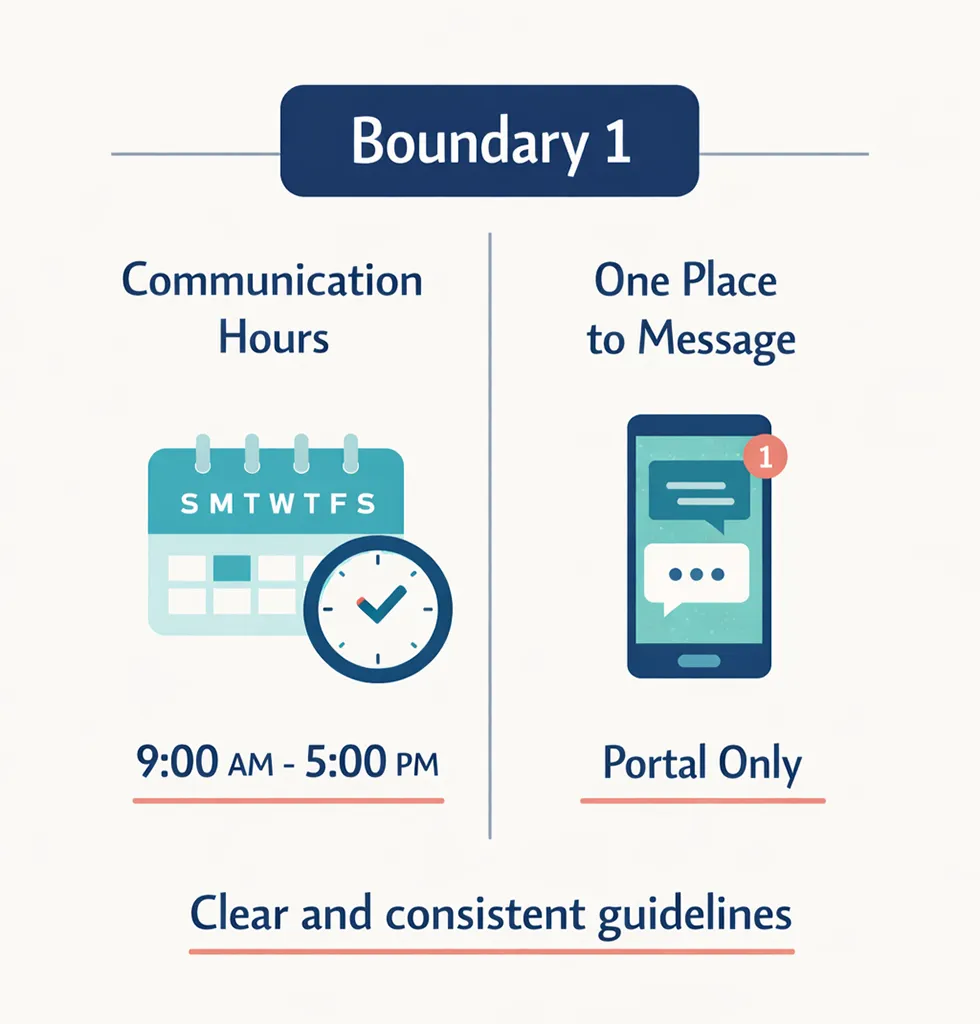
This boundary has two parts: clients contact you through one channel, and you reply during set hours.
Your one channel might be email. It might be your booking system messaging tool. The key is that you choose one place, so you’re not checking texts, DMs, voicemails, and email all day long. Consolidating messages into one channel also protects confidentiality more effectively.
Your set hours can be whatever fits your life and clinic. The point isn’t the exact time; it’s that the time exists, and it supports professional behavior for long-term sustainability.
Example script
“Thanks for your message. I reply to clinic messages Monday to Thursday, 10 AM to 4 PM.”
How to make it stick
The big win here is setting expectations early, then repeating them in a few spots so you don’t have to “police” it later.
A practical approach:
I applied this boundary pretty well. It was in my intake process from the off but I didn’t get around to adding it elsewhere or setting up auto-replies for quite a few months. I could have helped myself out more there, especially when I was starting up and had more time waiting for clients to find me.
2) Late cancellation and no-show policy
What it is
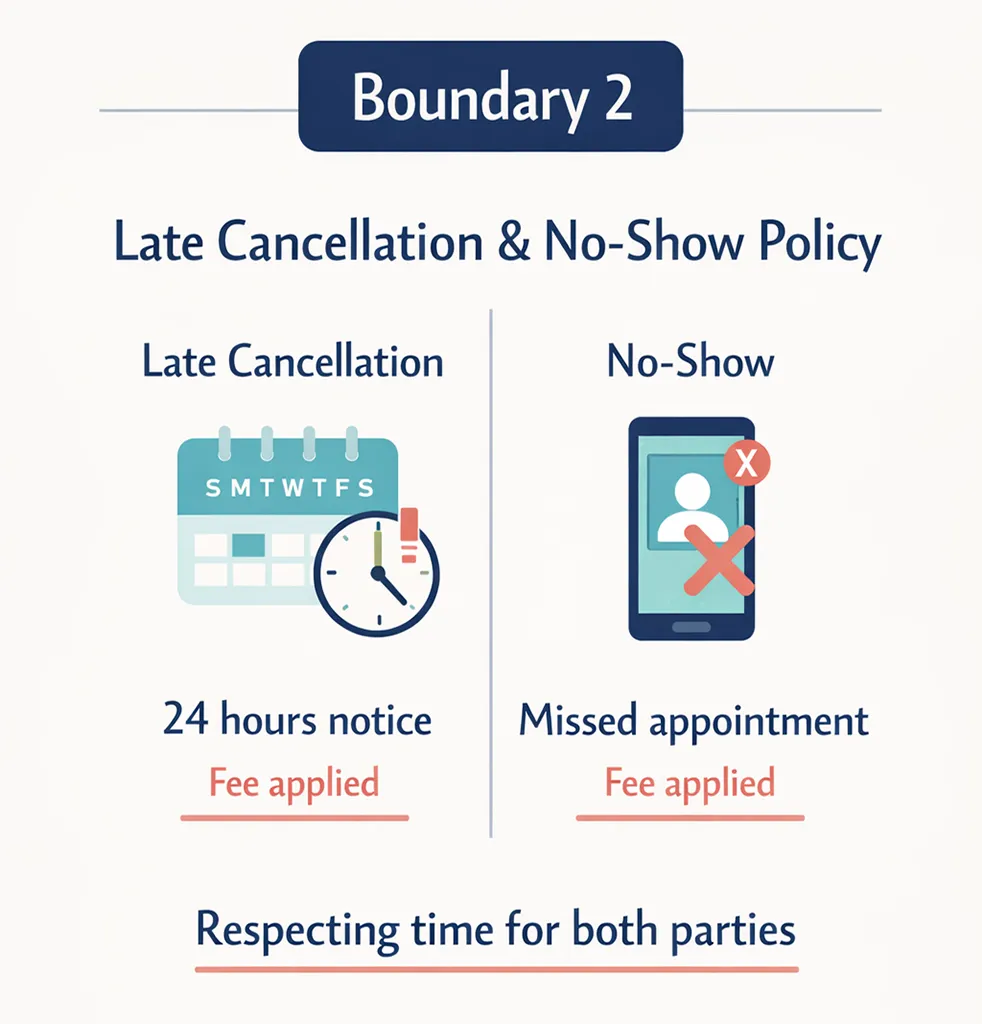
This boundary is a clear cut-off time for changes, with a set fee (or full charge) that you apply consistently.
You choose the policy. Some clinics charge 50 percent for less than 24 hours notice. Some charge the full fee. The best policy is the one you can actually follow every time.
The key is that it feels clear, not scary. You’re not trying to punish anyone. You’re protecting booked time that can’t always be filled at short notice.
Example wording
“Appointments changed with less than 24 hours’ notice are charged at 50%.”
How to make it stick
Most cancellation policies fail because they’re hidden, or they’re said once and never mentioned again.
To help yours hold:
I’ll be honest. I did make the odd exception to my cancellation policy. There was one client that had to rush her daughter to hospital. That client didn’t have any history of arriving late or canceling previously and she still managed to phone and let me know what the situation was. I made an exception in that one case and I made it clear that it was a one-off. Just be aware that an exception can become an expectation so you have to judge the client and circumstances carefully.
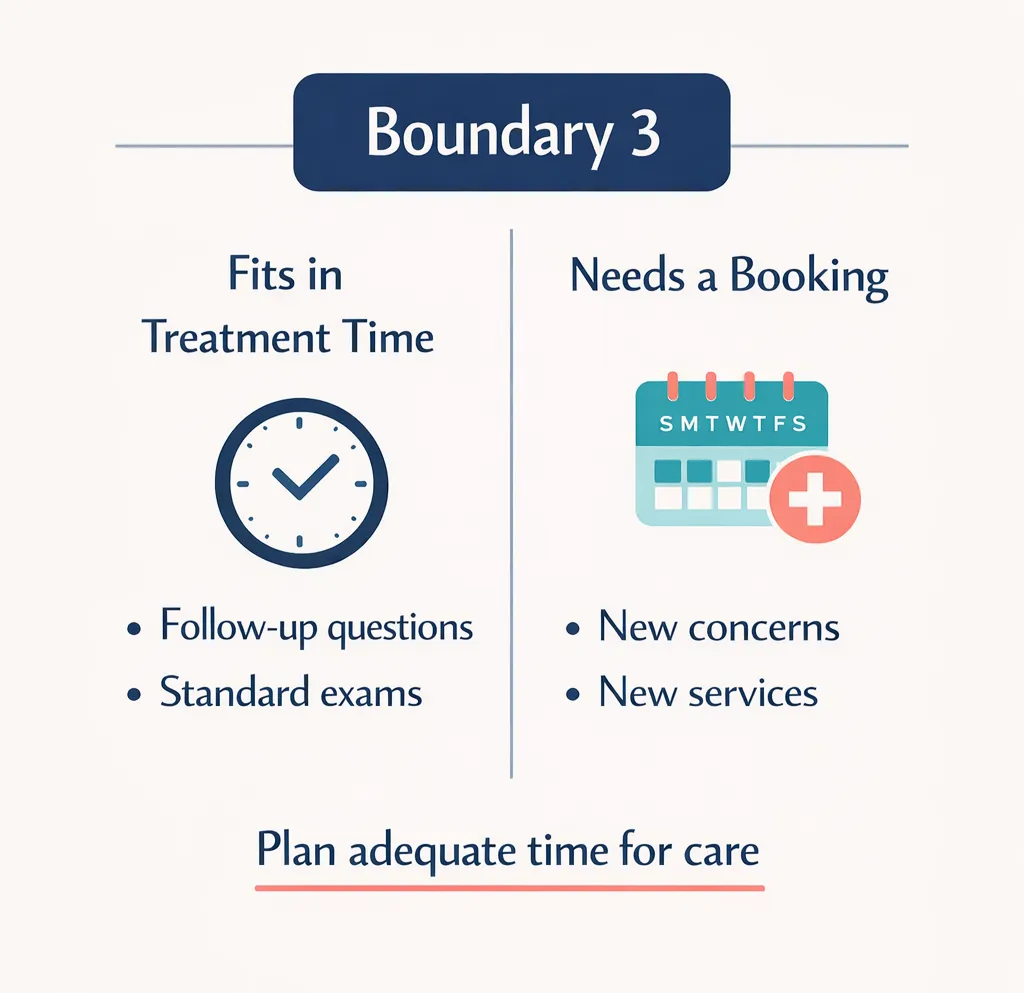
3) Session scope: what fits in treatment time and what needs a booking
What it is
This boundary separates quick admin questions from clinical advice.
It’s fine to answer a simple scheduling question by email. But treatment advice between sessions needs a limit. If a client’s symptoms change, if they have a flare-up, if they want supplement guidance, or if they’re dealing with new pain, that’s often a follow-up appointment.
This protects you and the client. It’s hard to assess properly by text, and it can lead to incomplete information and unclear decisions.
Example script
“I’m happy to answer a quick scheduling question by email, but for treatment advice or symptom changes, please book a follow-up so that I can assess it properly.”
How to make it stick
This one becomes much easier when you make the next step obvious.
A few ways to do that:
This is one boundary that I wish I’d realised about sooner. It didn’t become a major issue for me but I did have a few back and forth messages with one or two clients that could have been avoided. It became much more straightforward when it became baked into my onboarding of new clients.
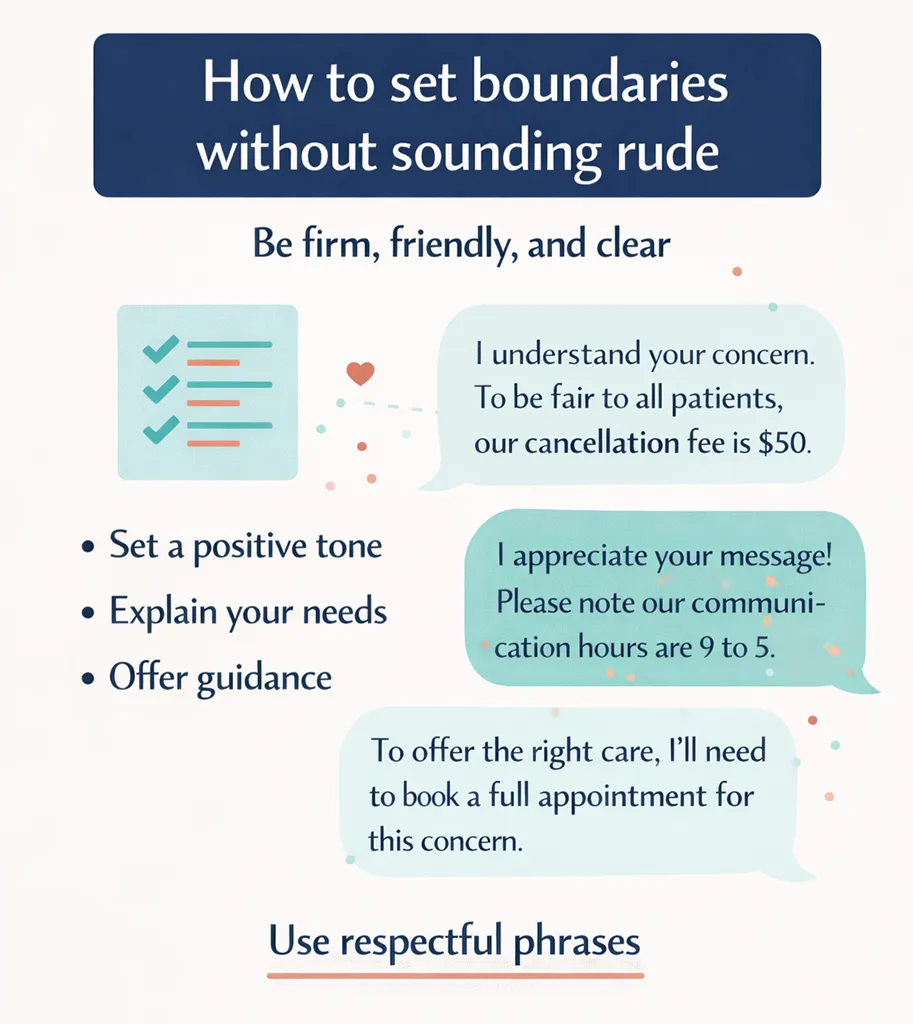
How to set boundaries without sounding rude
Calm language that still feels warm
Boundaries land best when they sound normal. Calm, plain language works. Long explanations often create more room for debate, even when you mean well.
Clear instructions are a kindness to the client, A simple pattern helps: lead with care, then state the rule.
“I want to support you well, so I handle clinical changes in session” is both kind and clear.
A few tone reminders that help:
What to say when someone pushes back
Clients might test a boundary, especially if they’ve had different experiences elsewhere. Prepare a few responses so you don’t have to think on the spot.
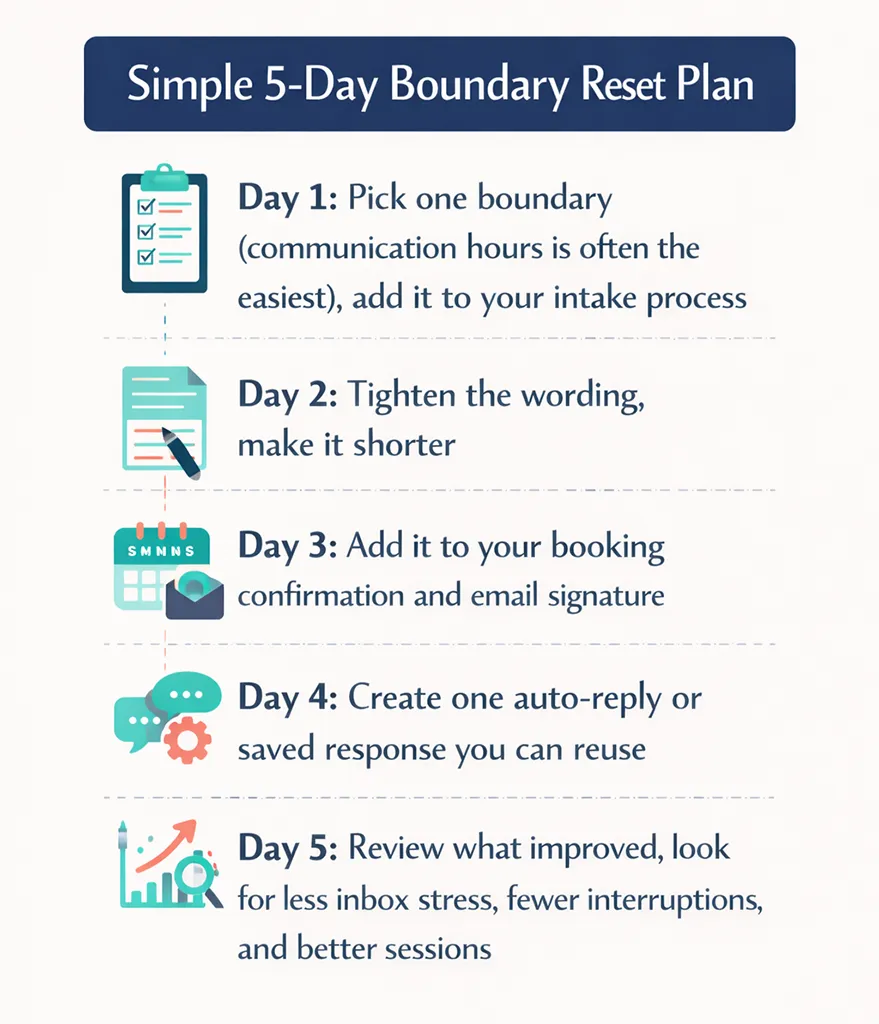
A simple 5-day boundary reset plan
Five days, one boundary, real change
These business practices help you focus on just one boundary over five days for sustainable change. You don’t need to change everything at once. Pick one boundary and reset it properly, start to finish.
If you want to go further, repeat the process with your next boundary the following week.
Boundaries are maintenance, here are your next steps
Boundaries aren’t mean, they’re maintenance. They protect your time, your focus, and the quality of care you give, without changing who you are as a practitioner.
Pick one boundary from this post and try the 5-day reset. Then notice what shifts in your week. Which professional boundary would make the biggest difference in your clinic right now?
Please Share
Have you got a question that I haven’t answered here? Drop it in the comments. This space is for sharing, not just reading. Sometimes the best advice comes from those who’ve been in the same shoes.
Let’s build a supportive community where no one has to figure it all out alone. And if this helped you today, consider passing it on to a colleague who might need it – a little support goes a long way.
Please pin one of these images to your main business tips board