Reset Between Client Sessions: A 5-Minute Routine for Solo Practitioners
You know the moment. One session runs heavy, you walk your client out, and the next person is already in the waiting room. You smile, you stay “professional”… but your brain is still replaying the last ten minutes of the previous appointment.
This is where a reset between client sessions matters. Not a perfect morning routine. Not a fantasy gap in your diary with a green juice and a calm playlist. Just a tiny, repeatable reset you can actually do in real life, in the messy middle of the day, to stop the spiral, protect your energy, and show up steady.
Because if you can’t get a handle on the first wobble, it tends to stack up. It builds, and builds, and builds.
Why the “in-between” can feel so hard when you work solo
When you’re a solo practitioner, you don’t get much of a buffer.
You’re the clinician, but you’re also the admin, the receptionist, and the person absorbing everyone’s emotions (the emotional sponge, whether you asked to be one or not). Even if you love your work, that’s a lot of gear changes in one day.
It’s also why a reset isn’t “self-care fluff.” It’s basic practice hygiene. The same way you wash your hands for infection control, you need a simple, reliable way to “wash your nervous system” between appointments.
If you’ve been working on mindset at all, this sits right in the practical end of it. Mindset is not just what you think, it’s what you do on a Tuesday at 2:10 pm when you’re behind and your shoulders are trying to become earrings. Those small actions become habits, and habits are what carry you through the busy seasons.
When I introduced the practitioner mindset to you I talked about the ladder rungs of mindset being identity, beliefs and habits. So today I’m going to give you one mini mindset shift you can turn into a daily habit: a five-minute reset you can run between clients without needing silence, incense, or a spare half hour.
What causes that spiral between sessions?
The between-session spiral often looks like “I’m fine, I’m fine, I’m fine”… then suddenly everything feels too loud, too fast, and slightly impossible. That doesn’t come out of nowhere.
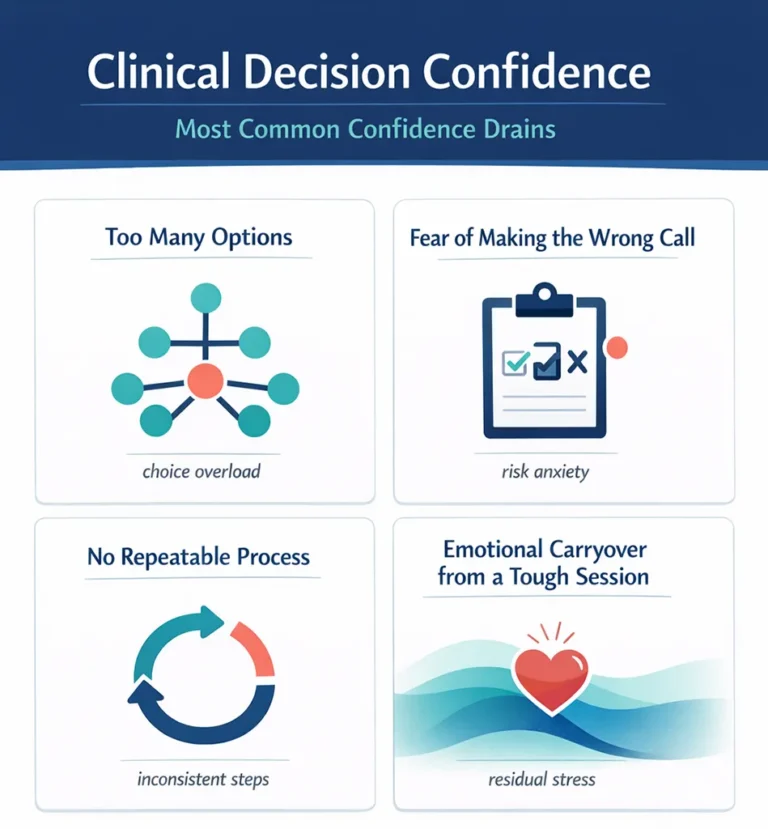
A few common causes tend to pile up:
If you work hands-on (acupuncture, massage, physio, chiro, any high-trust treatment), you already know the body holds tension. You see it every day in your clients. The only twist is that you might be ignoring it in yourself because you’re busy being capable.
The result is predictable: you rush, you forget small things, your voice speeds up, you lose your train of thought, and the whole day feels more frantic and heavier than it needs to.
Why a tiny reset changes the whole day
The frazzle rarely arrives as one big dramatic event. It creeps in through constant microstress.
When you move from session to session without any pause, your nervous system doesn’t get a chance to recalibrate. And it doesn’t just affect you.
Clients pick up on your energy. Even lovely, easy clients can sense when you’re scattered, tense, or still “with” the last person. In hands-on work, your presence is part of the treatment. Your listening, your steadiness, your attention to detail, it all lands better when you’re regulated.
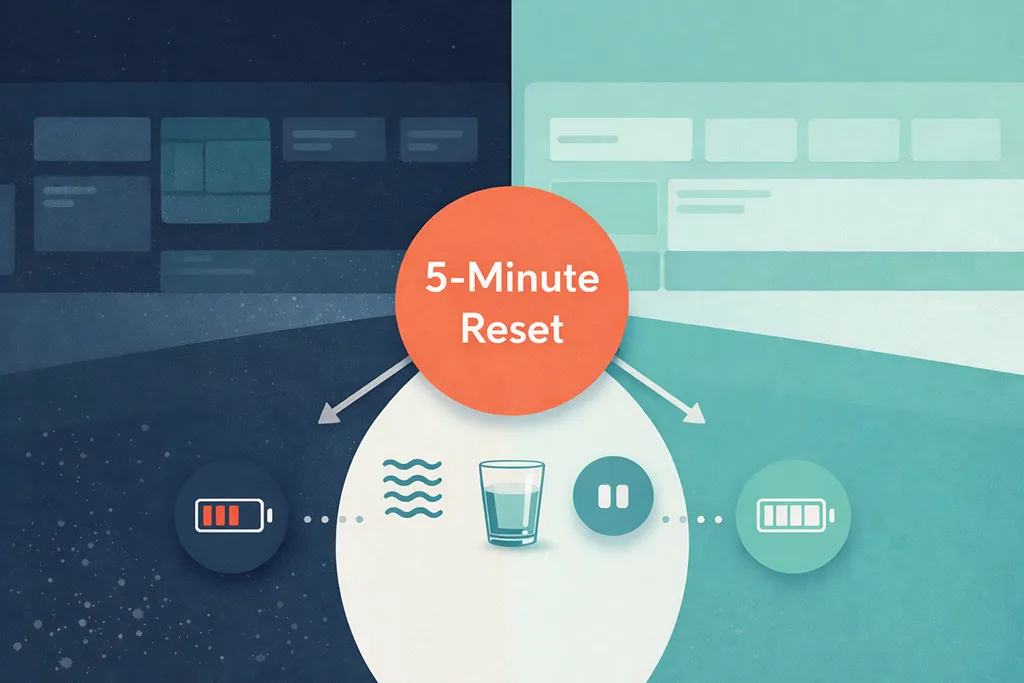
A short reset helps because it does four practical jobs:
- Closes the last session so it stops tugging at your attention.
- Clears your body so you’re not carrying tension into the next room.
- Sets one intention for the next client so you walk in with a simple plan.
- Creates a visible start line in the space, so your brain believes the switch has happened.
It’s also quietly good for business. When you feel steady, clients feel safe. When clients feel safe, they come back, they follow plans, and they refer people. (No big marketing speech required.)
If you want a bigger picture way to think about building a sustainable practice, this pairs well with a simple business plan for health practices because both are doing the same job: reducing chaos by making “what happens next” clearer.
The 5-minute reset protocol you can use between appointments
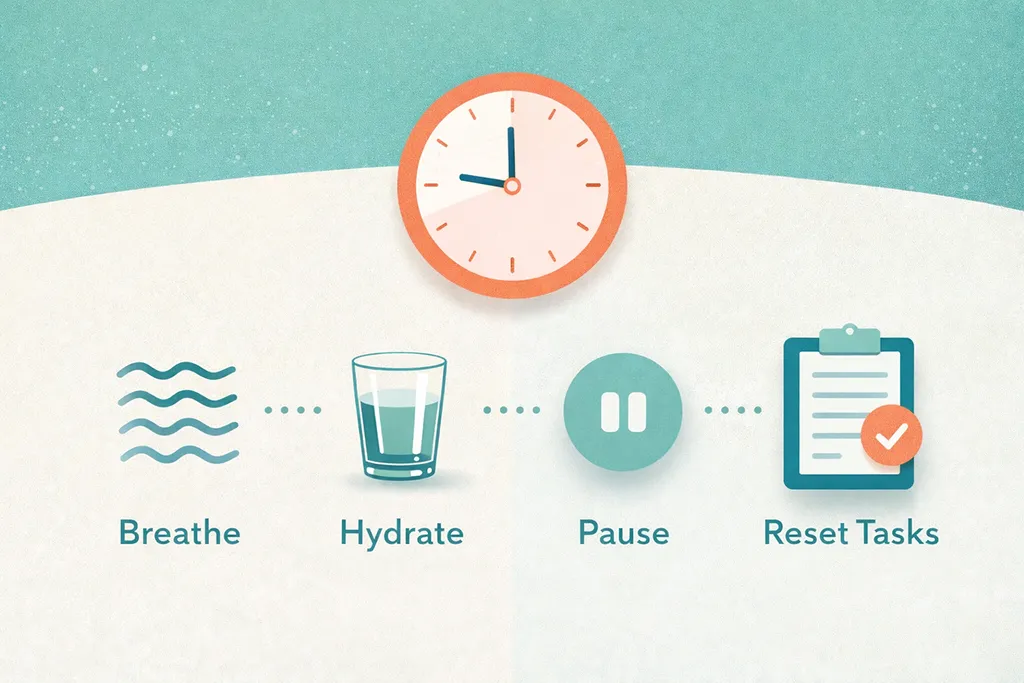
You’re not trying to become a different person in five minutes. You’re just giving your brain and body a clear switch.
The timings below are the goal once you’ve practiced a bit. The first few times might take longer, and that’s fine. You’re building a habit.
Step 1 (60 seconds): Finish the minimum notes
Write only what future-you needs to be safe and consistent. Not perfect notes, not beautifully worded notes, not “I will remember this later” notes.
A repeatable structure helps. For example:
A structure like this is easily turned into a template that you can reuse. I used to use a clinic notebook in my session. I’d fill out key sections of notes before, during and straight after each appointment so that I could come back and transfer that to my online system. My workflow was to build that in to buffer time straight after the previous client so that I could get everything done in one space.
If that’s not for you and you’re behind, write a “placeholder” note you trust. Something simple like: same needle set as last time, good response, plan to continue, finish details later. The point is to stop your brain keeping the loop open.
Don’t re-read the whole chart unless you truly have to. This is not that moment.
Step 2 (30 seconds): Close the loop on the last session
Stand still for one breath. Just one.
Then “name” the session in one short line, the way you’d label a folder:
Low back pain, anxious, needs follow-up plan.
Next, write the next action in one sentence. For example: email exercises link after lunch.
If you can’t do it now, schedule it, then let it go.
The key here is simple: then stop thinking about it. You’ve captured it. Your brain can relax.
Step 3 (60 seconds): Clear the room cues
This is the “visible start line” piece.
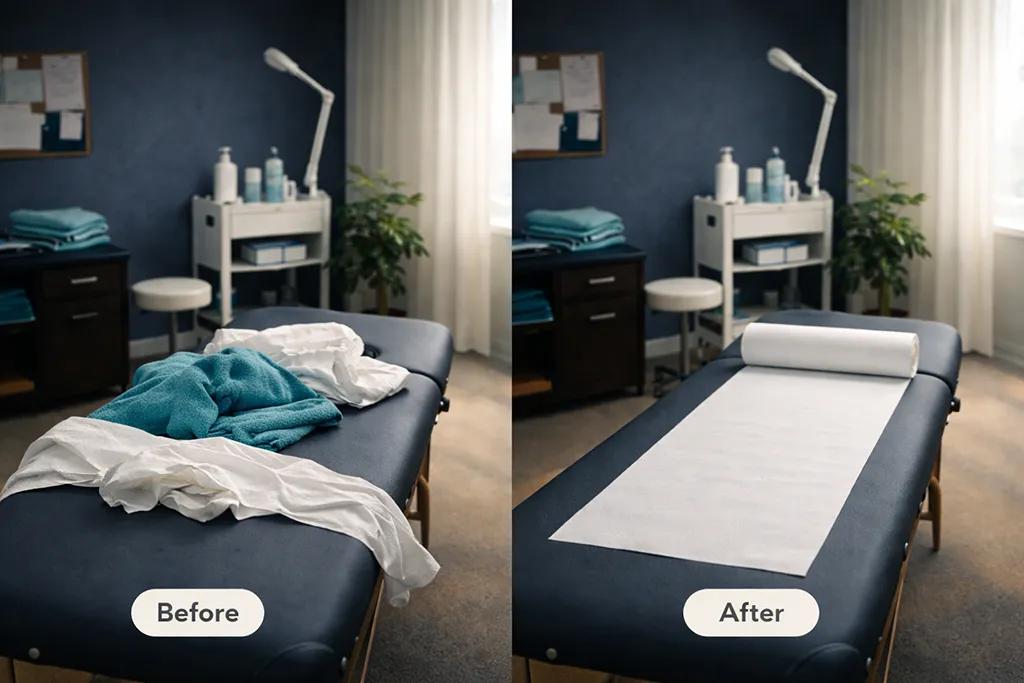
Do your normal reset of the treatment space: strip linen, clean the surface, set the room back to your baseline. Then do a ten-second tidy of the hotspots that shout at you (trolley top, chair, floor by the door, the bit you always notice).
Finally, change one sensory cue. Just one. That shift helps your brain release the last session.
A few options that work well:
You’re telling your nervous system, “That one is finished. This one is new.”
Step 4 (60 seconds): Reset your body (not your personality)
This step is physical, on purpose. Your body holds the last session whether you want it to or not.
Drop your shoulders. Yes, you have to tell them.
Take three slow breaths with a longer exhale than inhale. Unclench your jaw, place your tongue on the roof of your mouth, and let your face soften.
Then drink water. It’s basic, and it’s easy to forget. If your brain feels like soup by mid-afternoon, dehydration is often part of it (annoying, but true).
If you feel buzzy or teary after a heavy client, do a quick shakeout of hands and arms.
Then place your hands on a stable surface for a beat (counter, chair, desk). That contact can signal steadiness to your body, like saying, “We’re here, we’re grounded, we’re moving on.”
Step 5 (30 seconds): Say a boundary phrase out loud
Quietly is fine. You’re not performing. You’re marking a boundary.
Use a short phrase that means “switch” to you. For example:
Pick one that fits the situation and your personality. The point is not the poetry, it’s the boundary.
Step 6 (60 seconds): Make a one-sentence plan for the next client
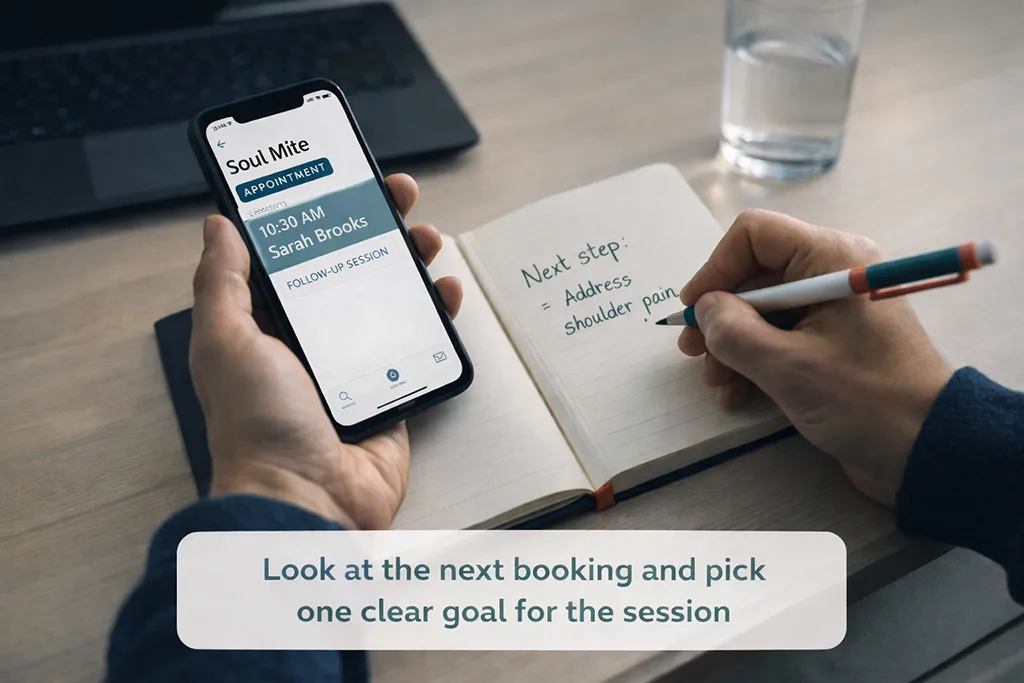
Look at the next booking and pick one clear goal.
Maybe: today is assessment and first plan.
Or: progress check and adjust.
Choose one thing you want to remember (ask about sleep, check how their recovery goal is going, follow up on that one detail you keep meaning to ask).
Decide how you want to feel in the room, maybe steady and unhurried, and say it out loud.
That’s it. You’ve created a plan, even if it’s a simple one.
When you don’t have five minutes: the 90-second and 30-second versions
Some days are polite. Some days are not. If you don’t have the full five minutes, use a smaller version that still closes the loop and resets your body.
The 90-second reset (when you’re properly behind)
- Write one next action for the last client (so your brain can stop holding it).
- Take three long exhales.
- Clear one surface and the doorway area.
- Read the next client’s name and your one-sentence goal, then welcome them in.
It’s not perfect. It’s enough.
The 30-second reset (when they’re already at the door)
Let them know you’ll be right with them.
Feel both feet on the floor. Exhale longer than you inhale twice. Relax your face and shoulders.
Touch the door handle and think, “New session.” Then open the door.
This is the smallest version that still gives your nervous system a clear switch.
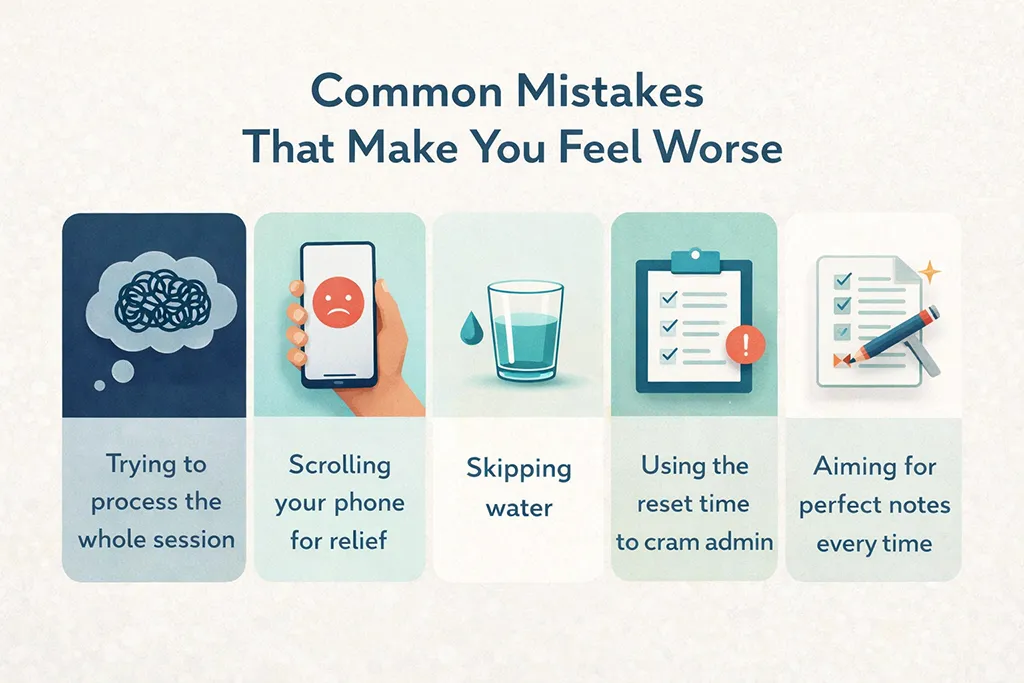
Common mistakes that make you feel worse (and what to do instead)
A reset is meant to reduce stress, not add another thing to “get right.” A few patterns tend to backfire:
The goal is a repeatable routine, not a heroic one.
How to make the reset a habit (without making it a big project)
Habits stick best when they’re tied to something you already do.
Pick a trigger you can rely on, like handwashing, changing linen, or closing the last client’s chart. When that trigger happens, you run your reset (full version if you can, short version if you can’t).
A tiny checklist helps too, placed where you’ll actually see it. Inside a cupboard door, on your laptop, on the trolley, anywhere your eyes land between clients.
Then choose one “reset anchor” you do even on the busiest days. Maybe it’s three long exhales. Maybe it’s clearing the doorway area. Maybe it’s your boundary phrase. One anchor keeps the habit alive when the diary is rude.
Finally, decide your minimum standard now, while you’re calm. Minimum notes, minimum tidy, minimum breath. Don’t wait until you’re stressed to make that decision.
Try it for three days in a row and notice what changes: your pace, your mood, your notes, your patience, and how quickly you feel like yourself again between sessions.

Bringing it back to you (and the work you want to keep doing)
A solid reset between client sessions isn’t about being serene all day. It’s about closing loops so your brain can focus, clearing your body so you don’t carry clients around in your shoulders, and giving yourself a clean start every time you reach for the door handle.
Keep it small, keep it repeatable, and let it be “practice hygiene” rather than another thing to be perfect at. Your clients will feel the difference, and so will you.
If you try this for a few days, notice where it helps most, your energy, your attention, or simply how steady you feel by the last appointment of the day. Please comment below, to let me know the changes you observe.
Please Share
Have you got a question that I haven’t answered here? Drop it in the comments. This space is for sharing, not just reading. Sometimes the best advice comes from those who’ve been in the same shoes.
Let’s build a supportive community where no one has to figure it all out alone. And if this helped you today, consider passing it on to a colleague who might need it – a little support goes a long way.
Please pin one of these images to your main business tips board