5 Mindset Myths for Solo Health Practitioners (And Simple Reframes That Help)
Some thoughts sound responsible on the surface, the kind of thing a “good practitioner” would think. But they have a way of draining you, week after week, until your practice feels heavier than it should.
These mindset myths for solo health practitioners often feel true because they’re common, not because they’re useful. The good news is you that just need a better thought to reach for, plus one small action that backs it up.
Below are five common myths, why they stick, and simple reframes you can start using right away.
What “mindset myths” look like in a solo practice
A mindset myth is a thought that feels true because you’ve heard it (or lived it) a lot. It tends to sound sensible, even noble. The problem is the price tag.
These myths can show up as:
The goal is not forced positivity. It’s usefulness. When a belief makes you smaller, more tired, and more reactive, it’s not helping your clients either (even if it’s wearing a very convincing disguise).
So let’s swap five unhelpful defaults for reframes that support a steady, sustainable clinic. Reframing is a proven technique for moving to a more empowering perspective.

Myth 1: “I should be able to do this alone.”
This one tends to show up in capable people. The calm ones. The ones who always figure it out.
Why it feels so true
Most health practitioners were trained to be competent, steady, and self-reliant. You might also be the “figure-it-out” person in your family, the one they all turn to for help.
In practice, this myth turns you into everyone in your business:
You’re the clinician, receptionist, biller, marketer, cleaner, and sometimes the unofficial therapist friend. Admin gets done in scraps of time, so even simple tasks drag on longer than they should.
How it keeps you small
You postpone help until you’re “making enough,” but the workload is often the very thing blocking growth. When everything rests on you, your capacity is capped.
And because you’re doing things in tiny pockets of time, you spend more effort switching tasks than actually finishing them.
Signs this myth is driving the week
A few common tells:
The reframe to use instead
I run a practice, so I use support like a pro.
Support is not an indulgence. It’s a business skill. The point isn’t to hand off everything. It’s to protect your clinical time and your decision-making energy.
Small support options that count
If hiring feels like a big leap, think smaller and more targeted:
The most helpful question here is simple: “If someone else did this task well and fast, what would that free me up to do?”
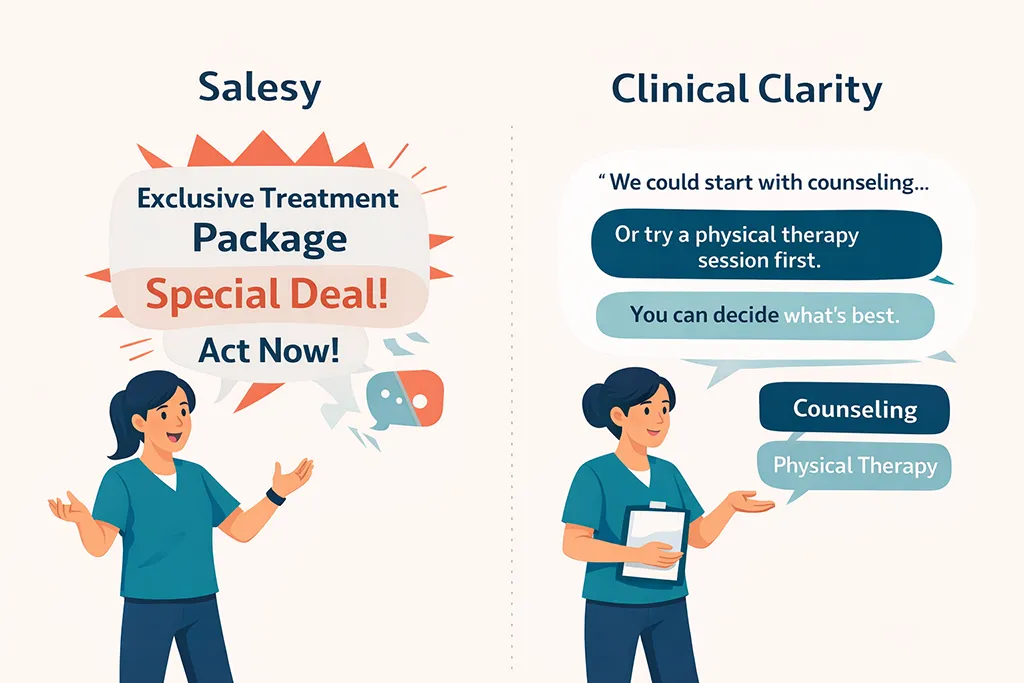
Myth 2: “Clients will think I’m salesy.”
If you’ve ever seen marketing that made you cringe, you’re not alone. For many practitioners, “sales” feels like pressure, and pressure feels unethical.
Why it feels so true
Ethics matter. Reputation matters. A lot of healthcare providers have a strong internal rule that says, “Don’t push people.”
The trouble is this myth often turns into silence. You hold back so much that clients don’t actually know what you offer, how to book, or what you recommend.
How it affects bookings and follow-through
When you’re trying not to sound salesy, you may:
Under-explain your services, avoid follow-ups, skip rebooking prompts, and stay quiet about packages. Then cancellations rise, and you find yourself waiting for clients to magically know what to do next.
Most people won’t. Not because they’re difficult, but because they’re busy and they’re already dealing with a problem.
This one was a biggie for me when I first started my clinic. Then I started noticing a few people that had been interested in my services went to another acupuncturist.
When I dug deeper (through friends of friends) I found that it wasn’t because they thought the other person was better at acupuncture or that they were a better fit. It was just because that person promoted their services more and they’d actually followed up on the initial interest shown rather than waiting for the client to come back to them.
What clients actually need from you
Your clients don’t need a pitch. They need:
Clear choices, clear next steps, and plain language.
A helpful way to think of it is: replace selling with guiding. Guidance is part of care.
The reframe to use instead
Clear offers reduce stress for my clients.
Clarity helps people feel safe. It reduces the mental load of “What do I do now?” and it makes it easier for them to commit.
One note that matters: too many choices can backfire. Options are kind, but an endless menu creates decision fatigue. Two options is usually plenty.
Gentle scripts that guide without pressure
If scripts make you feel awkward, treat them like clinical phrasing. You’re borrowing words so your brain doesn’t have to invent them mid-session.
That’s not being salesy. That’s reducing uncertainty, and uncertainty is stressful.
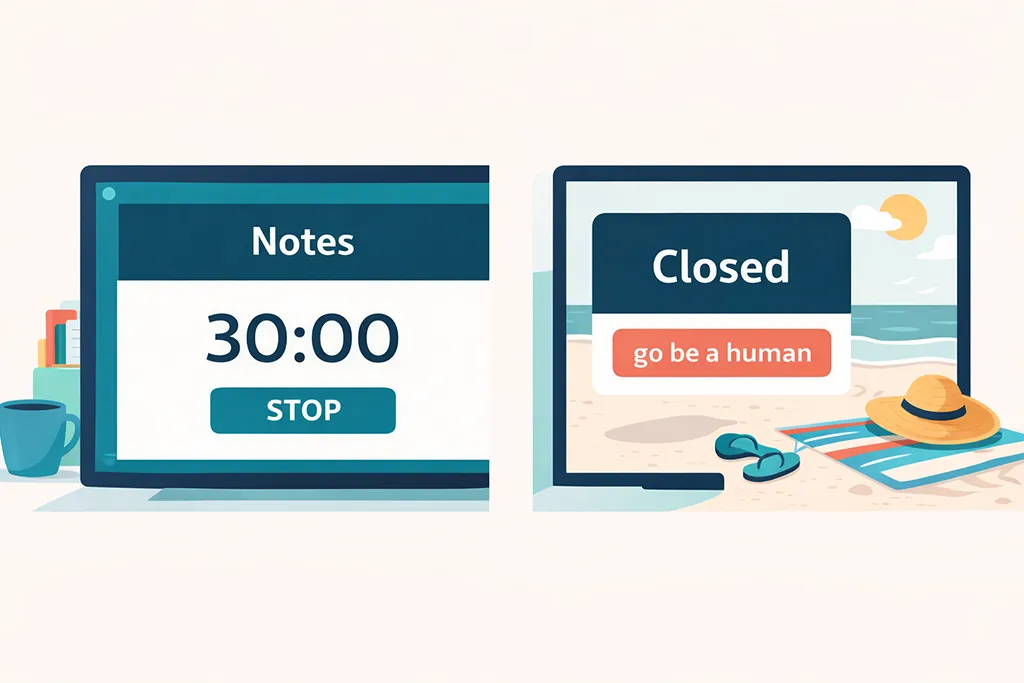
Myth 3: “I have to work nonstop.”
This myth often hides behind a very decent motive: you care. You don’t want to let people down.
Why it feels true
There’s always one more email. One more note. One more task that might help the practice.
And because you’re responsible for so much, it can start to feel like stopping is risky.
Why nonstop work makes a practice fragile
Nonstop work doesn’t create safety. It creates fragility.
When you’re tired, decisions get slower. Planning gets avoided. Small mistakes sneak in. Your practice can start to feel like a hungry animal that needs feeding all the time, which is not the relationship anyone wants with their work.
The reframe to use instead
Rest is part of my clinical skill.
Most practitioners regularly advise clients to rest. If rest supports healing, it also supports your judgement, your patience, and your ability to be present.
This is not about grand gestures. It’s about working in cycles, not marathons.
Simple ways to build rest into the week
A few practical tweaks that don’t require a full life redesign:
You’re not trying to do less because you’re lazy. You’re trying to do the right things with a clear head.
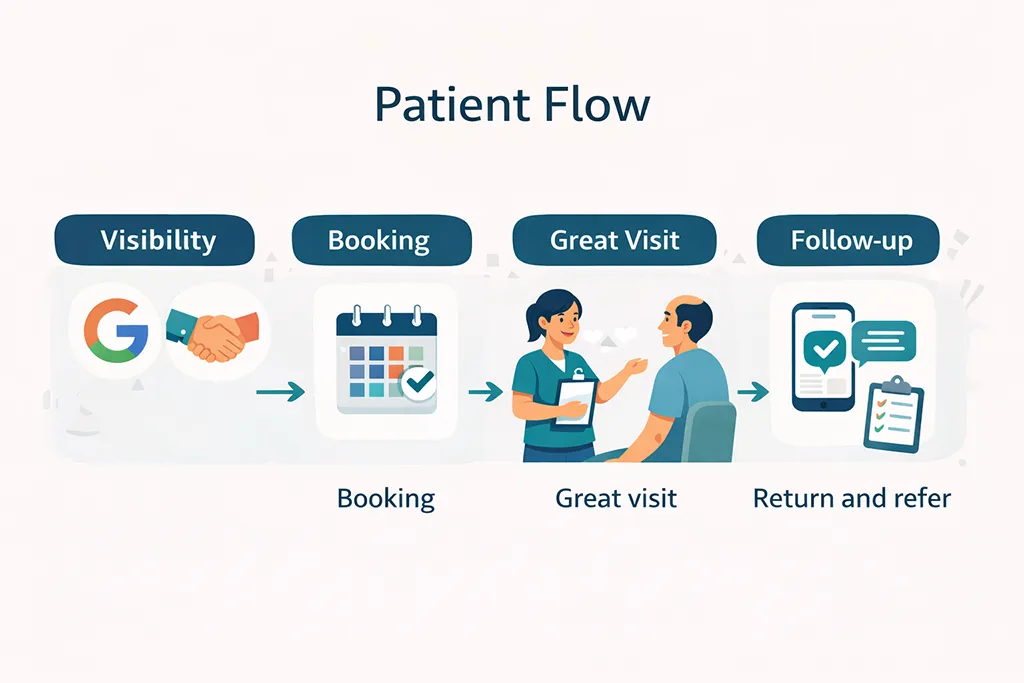
Myth 4: “There aren’t enough patients.”
Seeing gaps in the diary can make this feel like a fact. Add scary news about costs and people cutting back, and your brain starts building a story fast.
Why it feels true
Empty spaces in the calendar look like proof. It’s easy to assume demand isn’t there, or that people have stopped spending on care.
How this myth leads to unhelpful moves
When this fear takes over, it often triggers reactive choices:
You might panic post online, offer discounts that feel awkward, or overbook to make up for quiet spells. Some practitioners also take on poor-fit clients because “at least it’s someone.”
Those choices can fill time, but they often create longer-term problems, like uneven weeks and work that doesn’t match your strengths.
A calmer reality check
Demand exists, but attention is messy.
People need reminders. They need clarity. They need trust. If they’re not booking, it’s not always because they don’t want help. It may be because the next step isn’t obvious.
If you want a useful structure for this, a simple plan helps you focus on what matters and ignore the noise. This article is a good place to start: simple business plan for solo health practices
The reframe to use instead
My job is to be easy to find and easy to book.
That’s it. Findable and bookable.
Practical actions you can control
You don’t need to become an influencer to do this. Keep it basic and repeatable:
None of this requires hype. It’s just removing friction, so the people who already want care can actually take the next step.
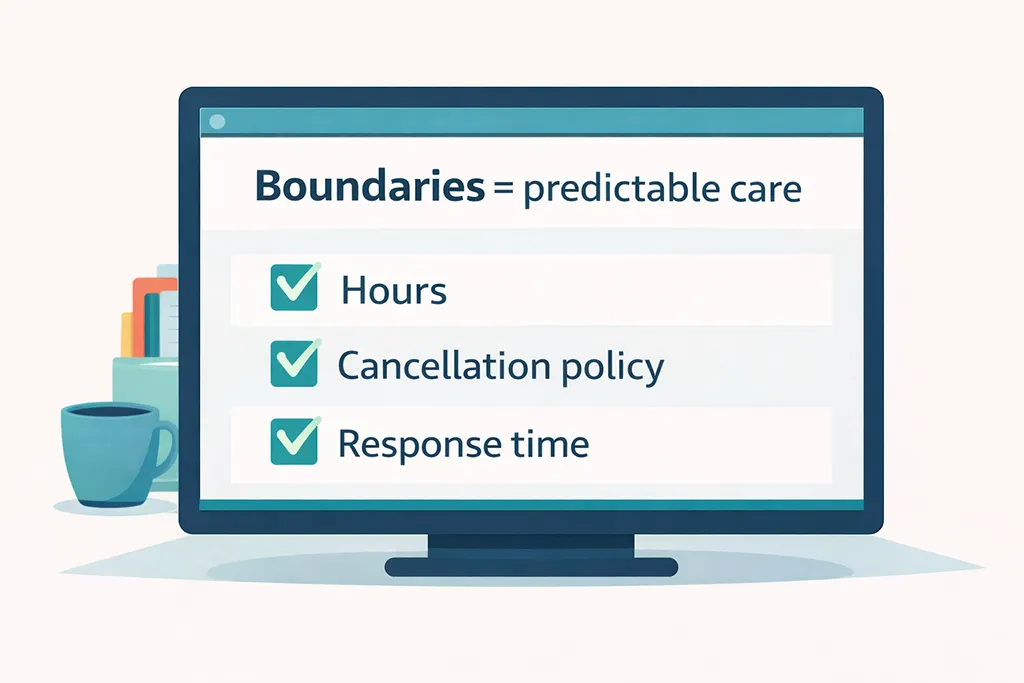
Myth 5: “I can’t set boundaries.”
This one often comes from kindness. You want to be flexible, helpful, and easy to work with.
Why it feels true
Many practitioners worry about complaints, bad reviews, or losing clients. So boundaries can feel risky.
But a lack of boundaries has a cost too, and it tends to arrive quietly.
What happens without clear boundaries
Late cancellations can wreck your week. After-hours texts become normal. You spend emotional energy managing expectations that were never set in the first place.
It’s not dramatic, it’s just draining, and it chips away at consistency.
I personally found that the clients that pushed at my boundaries were my least profitable clients. They were still paying the same as everyone else but they were the most likely to turn up late or not at all, and even wanted extra considerations (eg. asking for later opening).
Firing these clients (by encouraging them to find another acupuncturist that was able to accommodate their extra considerations) didn’t hurt my bottom line overall due to the extra time they cost me.
The truth most people miss
Boundaries protect the client experience, not just your sanity.
Predictable rules feel safe to most people. They make your care more reliable, because your time and attention aren’t being pulled in ten directions.
The reframe to use instead
Boundaries make my care consistent.
Consistency builds trust. It also protects the next client in your day, not just you.
Clear boundary examples you can copy
A few simple, calm lines do a lot of work:
To make boundaries easier to hold, put policies in more than one place: on your booking page, in the confirmation email, and in signage if you have a clinic space.
Also, keep one calm template response you can copy and paste (and yes, do remember to change the client name).
Quick reframe summary you can keep nearby
|
Mindset myth |
Helpful reframe |
|---|---|
|
“I should be able to do this alone.” |
I run a practice, so I use support like a pro. |
|
“Clients will think I’m salesy.” |
Clear offers reduce stress for my clients. |
|
“I have to work nonstop.” |
Rest is part of my clinical skill. |
|
“There aren’t enough patients.” |
My job is to be easy to find and easy to book. |
|
“I can’t set boundaries.” |
Boundaries make my care consistent. |
Your one small step for the week
Pick the myth that hits hardest right now. Just one. Then choose one reframe and take one small step that proves it’s true.
If you chose the “alone” myth, your step might be pricing a bookkeeper. If you chose “salesy,” your step could be adding a two-option recommendation at the end of each session. If you chose “no boundaries,” your step might be writing one message policy and placing it in your booking confirmation.
Small steps count because they’re repeatable, and repeatable is where practices get steadier.
Which myth shows up most in your clinic at the moment, and is there one you’d add to the list? Please comment below to let me know or email me.
Please Share
Have you got a question that I haven’t answered here? Drop it in the comments. This space is for sharing, not just reading. Sometimes the best advice comes from those who’ve been in the same shoes.
Let’s build a supportive community where no one has to figure it all out alone. And if this helped you today, consider passing it on to a colleague who might need it – a little support goes a long way.
Please pin one of these images to your main business tips board