Define Your Niche as a Holistic Practitioner: A Simple Guide
Do you help “everyone” and feel uneasy about narrowing down? You’re not alone. But here’s the twist. When you define your niche as a holistic practitioner and write a clear promise, you make it easier for the ideal client to find you, trust you, and book you.
In this guide, you’ll learn how to define your niche as a holistic practitioner without losing the soul of your wellness practice, how to test a niche with low risk, and how to write a one-line promise you can use everywhere. You’ll also see examples you can adapt today, plus tips for attracting the right clients.
If you’d like a roadmap to building your base, you may also like this companion guide: Build a Client Base as a Solo Health Provider.
Why Niching Down Feels Hard, But Why It’s Worth It
As practitioners, we’re trained to help humans, not segments. When you know your practice can help a wide range of issues, choosing a niche can feel very difficult. It can feel like you’re letting people down or wasting parts of your training, whether you’re a therapist or wellness coach. You may also feel the urge to explain that your approach can help everyone, because often, it can.
That said, clarity helps you faster than any marketing ads ever will. Niche clarity builds recognition, raises trust, and makes the right referrals flow. Starting narrow doesn’t box you in, it opens doors. People remember you and repeat your words. Your marketing becomes simpler. Your day feels lighter.
Here’s what you’ll gain today:
If you’d like to check your business foundations as you go, the free Balanced Business Health Check is a handy next step.
Quick benefits of clarity
The Hidden Costs of Staying Broad in Your Practice
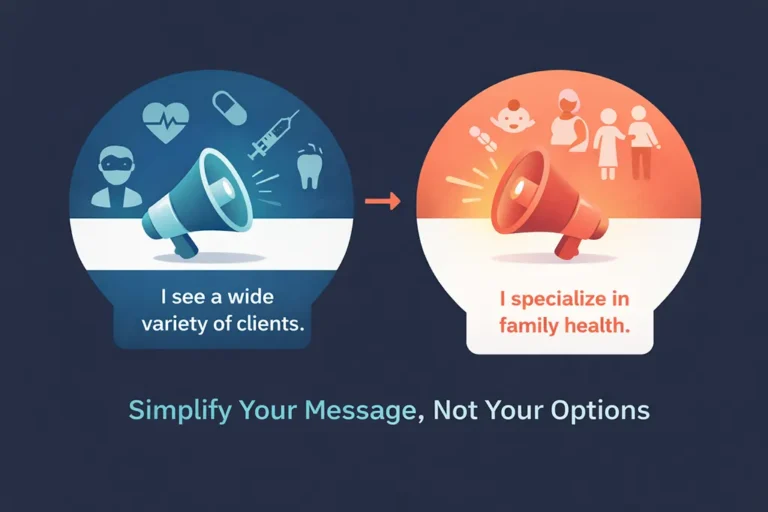
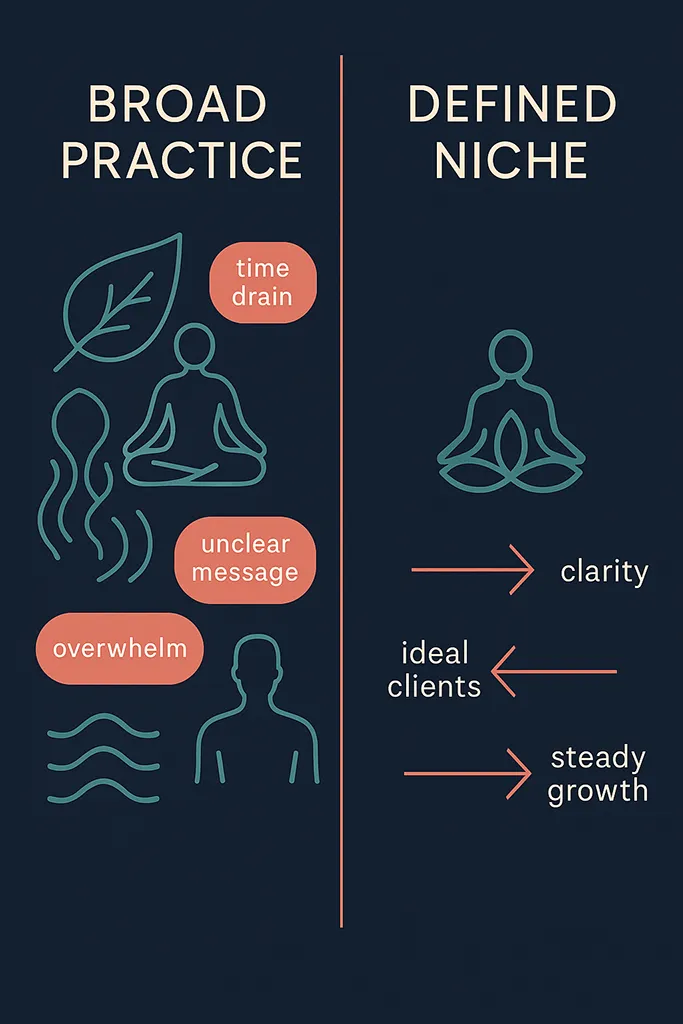
When you try to be available to everyone, you stretch your message thin. It’s not that you can’t help many people. You can. The problem is that people don’t understand who you help best, or how to talk about it when referring you to a friend.
Common worries that keep you broad:
The real costs add up:
A clear focus saves your time, energy, and budget. It also helps you stay safe from burnout. You get more of the work you enjoy and fewer cases that leave you wiped out.
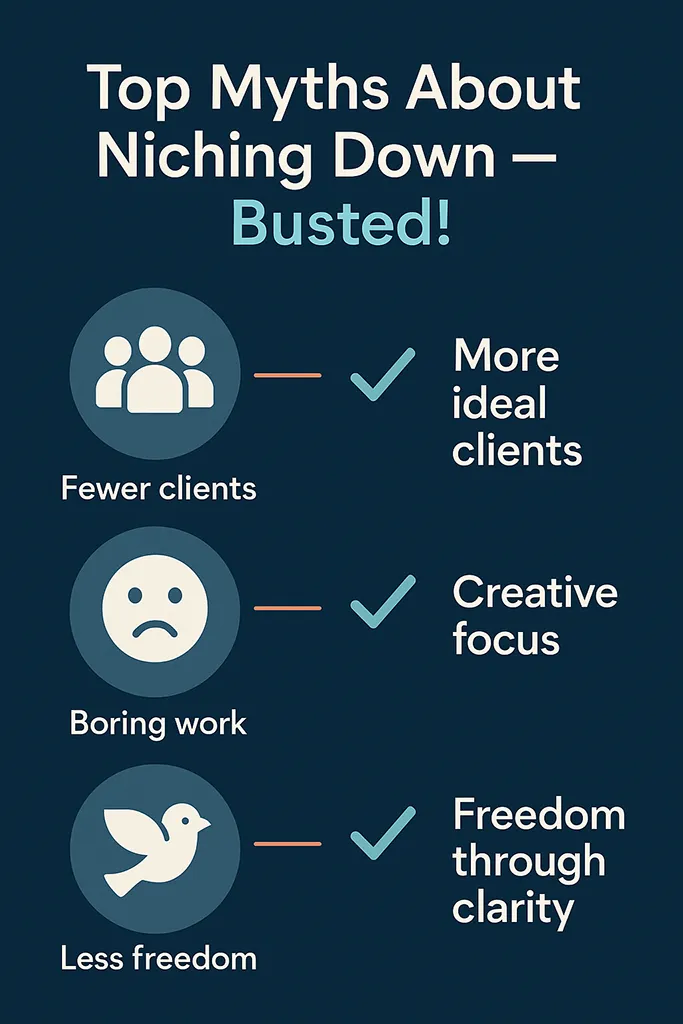
Busting the Top Myths About Niching Down
Myth 1: Niching means you stop helping others
My own niche was retired women with pain conditions, but I still got a call from a young woman with endometriosis asking if I could help. And I could and not only did they become a regular client, but they referred others to me.
Myth 2: You need the perfect niche
Myth 3: Narrowing means less money
Myth 4: Pick by modality
Myth 5: You need years of data
Myth vs. Reality at a glance
|
Myth |
Reality |
|---|---|
|
Niching stops you helping others |
You still treat others, you only focus your marketing |
|
You need the perfect niche |
Start what seems to fit, then refine |
|
Narrowing cuts income |
Clear offers raise trust and referrals, and support higher pricing |
|
Pick by modality |
Choose by problem, person, or outcome |
|
You need years of data |
Use the patterns and rebooks you already have |

What Happens When You Define a Clear Niche and Promise
Good things start to stack. When you can describe what you do in one simple sentence, other people can repeat it. Your messaging spreads without effort. This grows your reach in a natural way.
You also attract ideal client cases you enjoy, which makes your sessions feel energizing. You stop rewriting your website each month to chase the next group. Admin shrinks because people arrive aligned with your offer.
Pricing becomes simpler because the value is clear. You protect your nervous system, which protects your practice. Your content feels easier to write. You show up with confidence, driving your practice’s success, because you know who you’re talking to and what to say. You become memorable and stand out in your local community.
A few practical outcomes:
How to Find Your Niche Without Overthinking It
Start small. Use three short lists and a quick review of your past bookings. This is a simple and low stress way to define your niche.
Make these lists:
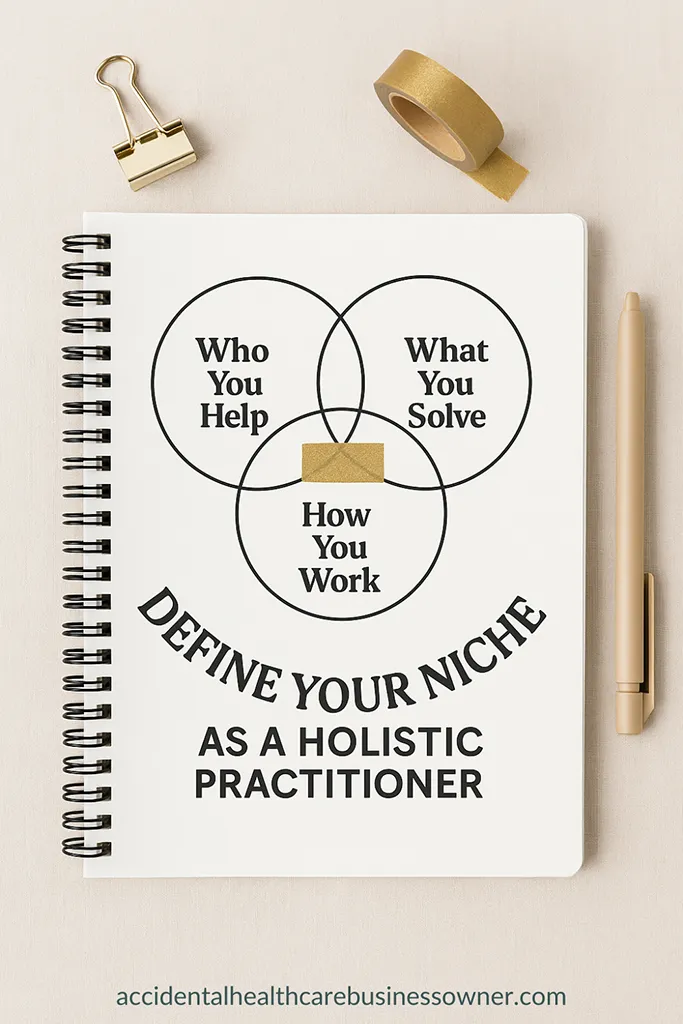
Look for overlaps. Check your past bookings. Who rebooked the most and why? Which referrals converted without a long call? If you’ve not been in practice long then pull what you can from your training. The patterns are there.
Choose one primary lens for now. One person, one problem, one outcome. Keep it tied to your clinic style and schedule. For example, you might choose, “older adults, chronic knee or hip pain, steady pain relief for daily tasks.”
Keep it simple. You’re picking a focus for your messaging, not a fence around your compassion.

Crafting Your One-Line Promise: The Easy Formula
Your promise should be easy to say and easy to repeat. You want the kind of sentence a client can share with a friend in the queue at the chemist.
The basic formula:
I help [type of person] with [problem] so that they can [result] (Optional add-on:) without [thing they want to avoid].
Tips to make it shine:
Examples you can adapt:
Sanity check questions:
If you hesitate over whether you can deliver consistently, drop the timeframe for now. You can test that later.

Test Your Niche Fast and Low Risk
Perfection slows you down. Your niche is a starting point. You can adjust. When you focus on a niche, people outside it will still reach out.
An example of this from my own clinic was that I very clearly targeted older women through all of my marketing, yet 30 to 40 percent of my caseload was men. It happens because clarity attracts, full stop.
Try a 30-day small scale niche program. Keep it light:
Track simple data:
Ask five happy clients to refer you using your one-line promise. See if the word spreads. Keep seeing other clients while you market the niche. If results are mixed, tweak one variable and run another 30 days. This is about learning, not locking yourself in.
Take Your First Step Today
Pick one small action and do it today. Keep it simple:
Niching doesn’t cut people out. It opens the door with clarity. If you’d like support picking your next best step, grab this free Balanced Business Health Check and use it to guide your focus. And please, take a moment for self-care today. A short walk, a hot drink, or a biscuit if you’re feeling faint. Your energy and health matter.
You can define niche holistic practitioner style in a way that feels honest and kind. Start with your three lists, write a clear one-line promise, then test it for 30 days. Keep what works and adjust calmly. The right clients will recognize themselves in your words. The result is a lighter workload, better referrals, and a steady practice that supports holistic wellness and protects your energy.
Please pin one of these images to your main business tips board!