The Real Cost of Waiting to Start Your Practice
If you keep telling yourself you’ll start your practice once you feel “ready,” you’re not alone. Amid the growing shortage of adequate healthcare provision though, the real costs of waiting to start your practice often show up quietly, month after month. If you wait too long, you may look back and realize the price was bigger than you expected.
This isn’t about guilt or pressure. It’s about getting clear on what delay really costs you, so you can make a decision you feel good about. You’ll walk through the hidden financial trade-offs, the opportunity costs you can’t recover, the personal toll that builds over time, and a simple way to estimate what waiting may be costing you in real numbers.
Understanding the Hidden Costs of Waiting
Waiting usually feels harmless because nothing “bad” happens right away. You’re still learning, still thinking, still planning. On paper, you’re being responsible. I get it – when I started my own clinic I had to convert it from an entertainment room, install a sink, paint it, equip it, all the little steps that took time. I hadn’t opened though and that had a cost.
In real life, delay has a price, even when you can’t see it yet.
Most costs fall into a few buckets:
Once you name the costs, you can decide what matters most to you, and what you’re willing to trade to feel more “ready.” Better though to make those decisions knowingly than to simply fall into them.
Financial Losses From Delay (Even If You Start Small)
The simplest financial cost is revenue you don’t collect because your doors are not open yet. That’s true even if you plan to start part-time, even if you want a slow ramp, and even if your first months would be light. I only ever planned to work part-time and my first 3-4 months were light. I was new to the area and I didn’t know people.
It’s not only income, either. Starting earlier can also mean earlier momentum: reviews, referrals, repeat visits, and systems that make your days easier.
Here’s a plain example, using very simple math. It may not match your own pricing and scheduling plans but work with me on it, just as an illustration.
If you could average just:
That’s $24,000 per year. Not forever, just as a basic starting point.
The numbers will be different for you, but the pattern is the same. Waiting doesn’t freeze life. It just shifts the start line later.
If you’re thinking, “But I’d have expenses too,” you’re right. The point isn’t that every dollar or pound would be profit. The point is that no start means no chance to refine, and no chance to build toward profit.

Opportunity Costs You Can’t Get Back
Some losses aren’t financial at first. They’re the things that would have happened if you were already in motion. Opportunity costs are often easy to overlook.
When you wait, you often miss:
This is where waiting starts to sting, because you can’t “make up” those months later. You can work hard in the future, but you can’t go back and be the version of you who started earlier.
A helpful way to think about it is planting a garden. You can’t cram a whole growing season into one weekend. The calendar matters.
Time: The Biggest Price You Pay
Money has a way of coming and going. Time doesn’t. That’s why time is often the real cost behind all the others.
When you delay your start, you don’t just delay income. You delay the whole arc of building something stable: the scheduling rhythm, the client base, the repeat care plans, and the quiet confidence that comes from running your own clinic week after week. Plus, delays create appointment wait times and long waiting lists that frustrate patients seeking timely care.
If you want a practice that feels calm and sustainable, time is not your enemy, but it is a factor. The sooner you begin, the sooner you can smooth out the rough parts. Patients already deal with systemic healthcare frustrations like treatment wait times, so avoiding those in your practice builds loyalty fast.
Time lost = practice growth delayed. It’s that simple.

Years Slipping Away (And Growth Rarely Happens in a Straight Line)
Practice growth often looks slow at first. Then it gets easier, because you have a base. Demand keeps rising too, especially from the aging population needing more services.
The early phase is where you learn things like:
You build momentum here with your first new patient appointments. You can plan for these things, but you still have to live them to understand them. My first few months were slow but my practice grew. Clients referred friends that also needed help and word spread.
It helps to remember this: every year counts, not because you need to rush, but because the learning compounds. When you start later, you also start learning later.
Energy Factors (Starting Takes a Certain Kind of Push)
Starting a practice takes energy. Not just physical energy, but mental energy.
You need some capacity for:
Waiting doesn’t always make this easier. Sometimes it makes it harder, because life gets fuller. More responsibilities, more fatigue, more competing needs.
Starting now doesn’t mean doing everything. It can mean doing a simple version with fewer moving parts, while you still have the drive to build.
A few advantages of starting sooner:

Competition Grows While You Wait
Even if you don’t love thinking about competition, it’s part of the real world. Other providers keep opening, marketing, networking, and becoming known in your area.
That doesn’t mean there’s no room for you. It does mean that waiting can add friction later, because you may have to work harder to be seen.
The Emotional and Personal Toll of Delay
Waiting isn’t only a business decision. It’s also a personal experience you carry around.
If you’ve been thinking about starting for a long time, you may know the feeling: the low-level hum of “I should be further along,” even when you’re doing your best.
That mental load can show up as:
You don’t need to beat yourself up for any of this. It’s normal. It’s also a sign that the cost of waiting is not just about money.
Regret Builds Over Time (And It’s Often Quiet at First)
Regret rarely shows up as one dramatic moment. More often, it shows up in small moments:
If any of this hits close to home, it doesn’t mean you’ve failed. It means you’re human, and you want something that matters to you.

Missed Life Milestones (The Practice Affects More Than Work)
A practice is not just a business. For many solo providers, it connects directly to life goals. Beyond personal aspirations, delaying your practice also affects patient well-being in the community, lowering patient satisfaction and contributing to poor health outcomes.
It affects those near and dear to you, who support you in your business and who you in turn support.
When you delay the practice, you may also delay things like:
You might not want all of these. But if you do want some of them, it helps to notice that waiting can push them further out than you intended.
Breaking Down the Math: Calculate Your Cost of Waiting
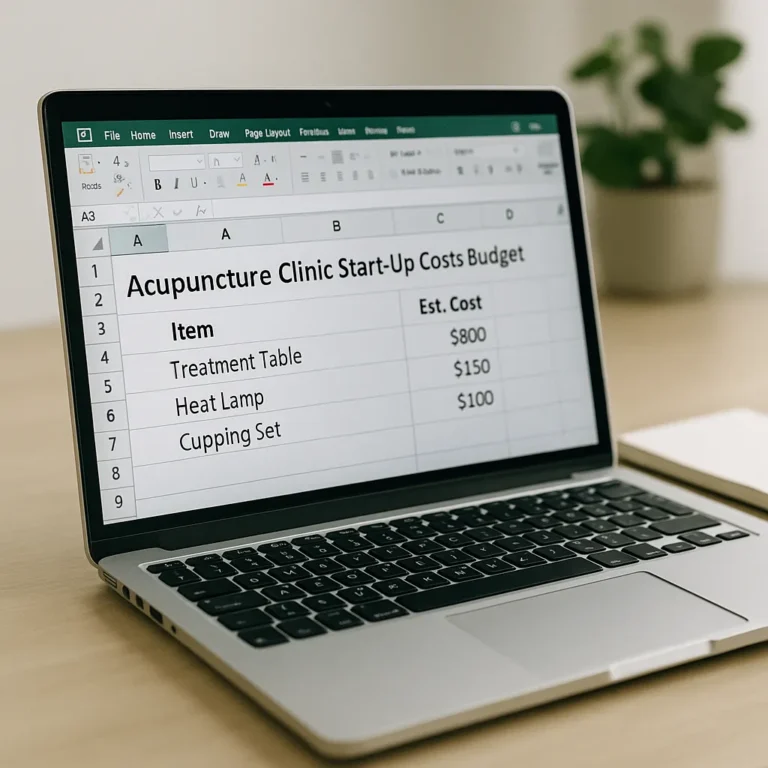
You don’t need a perfect spreadsheet to get clarity. You just need a simple estimate.
The goal is not precision. The goal is to stop thinking in vague feelings and start thinking in rough numbers you can respond to.
Step-by-Step Cost Calculator You Can Do in 10 Minutes
Pick numbers that feel realistic, not ideal.
After you do the math, write down one more thing: what you think your true barrier is. Money, fear, time, perfectionism, childcare, health, uncertainty, paperwork. Be honest. That answer tells you what kind of support or structure you actually need.
Real-World Style Examples (Use These as Motivation)
These are not promises, just examples of how the math can look when you apply it to your own situation.
I delayed my own start because we moved across country and I renovated an annex to be my clinic. This put my start date back by 4-5 months but you can see how that could have snowballed if I’d waited any longer.
If you’ve been waiting because the numbers feel scary, this can be a relief. You’re not guessing anymore. You’re choosing.

Action Steps to Avoid the Costs (Without Overwhelming Yourself)
Starting doesn’t have to mean building a perfect practice all at once. It can mean building the smallest version that is safe, legal, and doable, then improving it as you go.
Here’s a simple way to think about it: start with what helps you see clients, get paid, and stay sane.
Overcoming Common Fears That Keep You Stuck
Most delays don’t come from laziness. They come from fear that looks practical.
Here are a few common ones, with a grounded way to respond:
If you want to reduce risk, choose a smaller start, not a later start.
Final Thoughts on Starting Now
Waiting can feel safe, but it’s rarely free. The costs show up as missed income, missed learning, and the slow weight of carrying an unfinished goal. When you name the trade-offs clearly, you can decide what you want to do next, and do it on purpose.
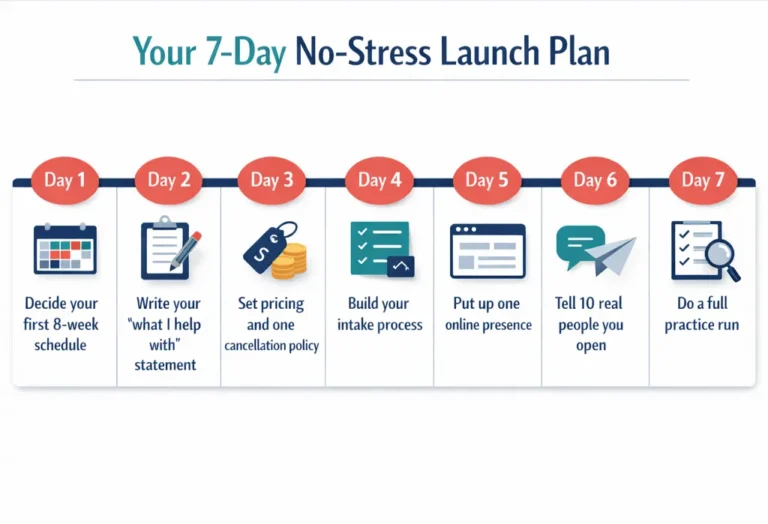
If you’ve been circling the same decision for months, choose one small action that moves you forward today, even if it’s not perfect. Pick a start date and a schedule you can commit to for 8 weeks (even if it’s part-time).
Your future self will feel the difference, and grasping the consequences is the real value of starting.
In part two, I’ll show you exactly how to do that – with a 7-day plan and the bare minimum setup to get going.
Please Share
Have you got a question that I haven’t answered here? Drop it in the comments. This space is for sharing, not just reading. Sometimes the best advice comes from those who’ve been in the same shoes.
Let’s build a supportive community where no one has to figure it all out alone. And if this helped you today, consider passing it on to a colleague who might need it – a little support goes a long way.
Please pin one of these images to your main business tips board