How to Use a 15-Minute Weekly Money Routine to Make Better Decisions in Your Practice
Use the data from your 15-minute weekly money routine to make better decisions in your practice, cut stress, and stay on top of clinic cash flow each week. Money stress in a solo practice often starts long before there’s a real problem. It creeps in when you haven’t checked the numbers, when you’re guessing, or when you only look at finances once things feel tight.
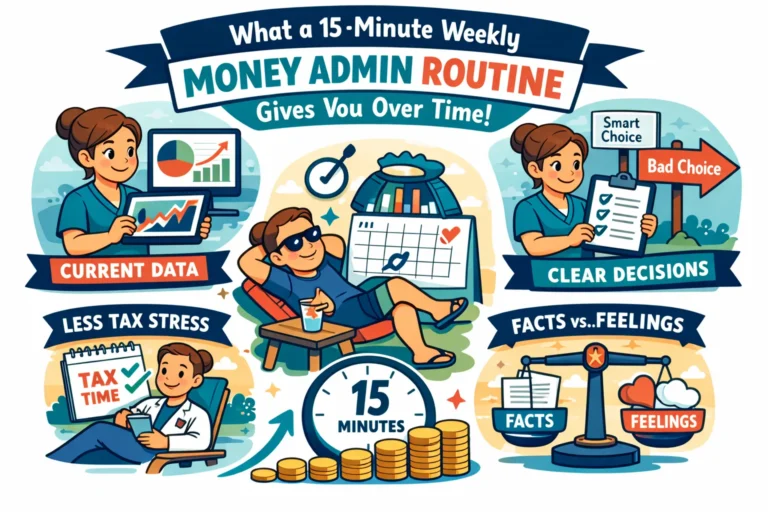
A short weekly money routine helps stop that spiral. When you know what’s coming in, what’s going out, and what patterns are showing up, you can make calmer decisions and run your practice with a lot less dread.
If you’ve already set up the habit, the next step is learning how to use what you’re tracking so those numbers can help you, not sit there looking pretty but ignored.
Why a weekly money routine matters so much in solo practice
If you work for yourself, you’re not only the practitioner. You’re also the person doing client care, admin, bookings, notes, marketing, and bill paying. Then there are all the tiny decisions in between, which somehow eat into that “spare time”.
That’s why money stress rarely comes from numbers alone. More often, it comes from not knowing. If you don’t check your finances regularly, your brain fills in the blanks, and it tends to do that in the least kind way possible. A slightly quiet week can whisper “the practice is failing.” A late payment becomes “I’m terrible at business.” It’s exhausting.
Our 15-minute weekly money routine cuts through that noise. It gives you a quick read on what’s true right now, instead of what your tired brain is inventing.
There’s also a useful clinic parallel here. You know how often clients do better with small, regular check-ins than with one big panic appointment after months of ignoring something? The same idea applies to money. Regular maintenance beats one giant catch-up session every time.
Calm practices don’t avoid problems. They notice them sooner.
That’s the real point of the routine. It isn’t about becoming obsessed with figures or turning into an accidental accountant. It’s about noticing small shifts before they become stressful, expensive, or hard to untangle.
So if you’ve been feeling behind, it doesn’t mean you’re bad with money. It usually means you need a simple system that helps you see what’s happening while there’s still time to respond.

The four biggest benefits of weekly money tracking
A short routine can do more than keep your records tidy. Over time, it changes how you feel about the business side of practice, which matters more than many people expect.
- It helps you stop relying on vibes.
There’s a big difference between “I feel uneasy” and “cash is tight this month.” When you know which one you’re dealing with, you can respond properly. That alone reduces stress, because certainty is easier on the nervous system than guessing. - It helps you catch problems early.
Lower bookings, rising costs, missed invoice payments, or a run of cancellations all look more manageable when you spot them this week instead of three months from now. Small problems are usually fixable. Big, vague ones feel much heavier. - It leads to better decisions with less panic.
Without current numbers, it’s easy to react from pressure. That can mean opening more appointment slots when you’re already tired, discounting too fast, or buying software because it sounds useful and is on sale. Weekly tracking gives context, and context makes choices steadier. - It builds trust with yourself.
Every time you sit down and look at your money, you send yourself a quiet message: “I can handle this.” That matters, especially if money has felt messy, avoided, or tinged with shame in the past. Even when things are tight, clear information is kinder than avoidance.
This part often gets missed. Many practitioners think the value is only in the numbers. But the emotional effect matters too. When you stop dodging your finances, you stop handing them extra power over your mood.
If the business side of practice tends to feel heavier than the clinical side, that’s common. It can help to pair this routine with other simple business habits that reduce decision fatigue, like defining your niche as a holistic practitioner so your marketing and scheduling choices feel clearer too.
How to track your numbers without making it a big project
The good news is that the format doesn’t matter nearly as much as the habit. A notebook works. A basic spreadsheet works. A simple printed template works. If you like color-coding, lovely. If you prefer plain black pen and no fuss, that’s fine too.
What matters is consistency, not cleverness.
A simple weekly snapshot is enough to start. These are the core figures worth checking:
|
Weekly figure |
What it tells you |
|---|---|
|
Income received |
What money came in this week |
|
Expenses paid |
What went out this week |
|
Net cash movement |
Whether the week moved you forward or backward |
|
Current bank balance |
What’s available right now |
Those four numbers, plus a short weekly note, can tell you a surprising amount. After a few weeks, the tracker becomes more than a record. It becomes a pattern finder.
That’s when the review gets useful.

What to look for after a few weeks
The goal isn’t to judge yourself. It’s to spot what’s normal, what’s changing, and what needs attention.
Start with income patterns. Look for weeks that are usually strong and weeks that tend to be quieter. You need to know both. A reliable busy period helps you relax a bit. A predictable dip gives you time to plan instead of panic. If certain weeks are always slower, ask whether that’s normal, seasonal, or a sign of a problem. School breaks, public holidays, and vacation periods often create natural dips.
Then look at expense patterns. Some costs creep up so slowly that you don’t notice until they’ve become annoying. Software subscriptions, supplies, small recurring tools, and annual renewals all belong here. If you’re paying for something you barely use, it may be easy to trim without affecting client care.
Next, check cash flow pressure points. Profit and cash flow are not the same thing. Profit tells you if the practice works on paper. Cash flow tells you whether the money arrives in the account when you need it to. For a solo practitioner, timing matters a lot. Rent may be due before insurer payments clear. A quiet week may land beside several bills. That’s where a buffer becomes useful.
Finally, notice the operational clues hiding in your numbers. Rising cancellations might point to reminder timing that could be improved or weak policies. A lower weekly average may show under-booked clinic sessions. Dips after a very busy week can hint at capacity strain, especially if you’re too stretched to keep pace. If you sell retail items, like ear seeds or self-care products, falling sales may point to poor placement or weak follow-up.
In other words, the tracker is not only about bookkeeping. It’s telling you how the practice is functioning.

How to turn tracking into decisions that help your practice
Once you can see the patterns, the next step is using them. This is where the routine stops being a record-keeping habit and starts becoming a decision-making tool.
Plan your schedule with more realism
If a certain clinic session is rarely full, it may not be the right slot. A Tuesday evening that looks good on paper but never books out is still taking up your energy. If one day fills easily and another stays half-empty, it may make more sense to adjust your clinic hours and move admin into the quieter space.
This matters because not all empty time is restful. Sometimes it’s the most draining part of the week, because you’re waiting around while still carrying the mental load of work.
Your numbers can also show when overwork is reducing income rather than helping it. If earnings drop after a packed week because you’re too tired to keep up, that’s useful information. More hours are not always the answer. Better timing often is.
Build a buffer before things feel urgent
Uneven cash flow is normal in many solo practices, especially in uncertain times. That doesn’t make it pleasant, but it does make it predictable enough to plan for.
If your tracker shows ups and downs, start setting aside a small amount each week into a separate buffer account. This is different from a tax pot. A buffer is there for slow months, annual fees, equipment replacement, or those weeks where three bills land at once.
Even a modest reserve changes the feeling of the business. It softens that “everything is fine until suddenly it isn’t” effect. It gives you room to breathe, which usually leads to better choices.
Make pricing decisions from evidence, not discomfort
Price reviews can feel awkward. Still, the numbers help here. If costs are rising and your clinic is already full, there may not be room to solve the gap by working more. In that case, a price increase may be the sensible move. If bookings are patchy, the issue may be schedule design, demand, or visibility rather than pricing alone.
The point is not that the numbers make the decision for you. They give you something solid to stand on. That’s much better than pricing from guilt, fear, or a vague sense that you “probably should.”
Tighten up cancellations and late payments
If cancellations keep showing up in your tracker, don’t write them off as bad luck. Repeated patterns usually point to something that needs attention.
You may need clearer reminder timing. You may need a firmer cancellation policy. You may need to mention the policy more often, follow up unpaid invoices sooner, or keep a card on file if that fits your setup and local rules.
None of that makes you harsh. It makes you able to keep running the practice.
Boundaries around money protect client care too, because a practice under strain is harder to sustain.
Notice when burnout is showing up in the business
Burnout doesn’t always arrive with drama. Sometimes it looks like putting off invoicing, avoiding admin, forgetting to transfer tax money, or feeling unable to face a 15-minute check-in.
That’s worth noticing.
If the routine feels impossible every week, it may be telling you something about your load, not your character. In those moments, the system matters more, not less. A short, boring routine can hold things together when your brain is too tired to rely on memory and goodwill.
Common mistakes that make the routine harder than it needs to be
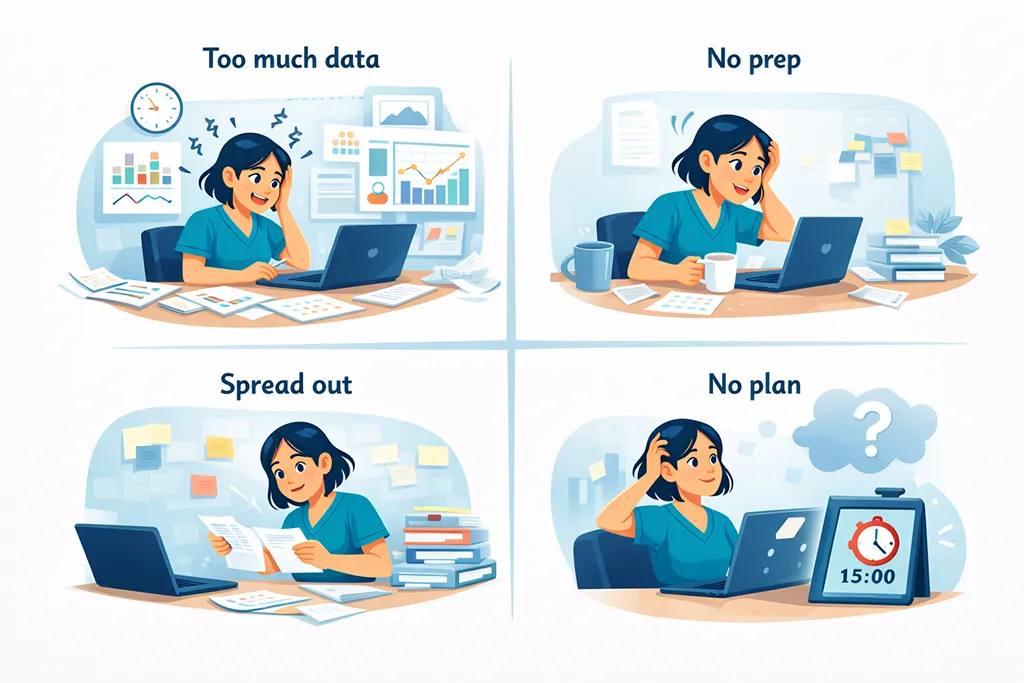
The easiest way to keep this habit going is to keep it plain. A few common mistakes tend to turn a helpful routine into something you avoid.
First, don’t let it become a big fussy project. If it takes an hour every week, you’ll dread it. The point is speed and clarity, not perfection. Fifteen minutes is enough when you focus on the right figures.
Second, don’t track dozens of numbers because you can. Most of them won’t help you decide anything. Stick with the handful that tell you what’s coming in, what’s going out, and whether cash timing is getting tight.
Third, don’t skip the routine when money feels uncomfortable. That’s usually when it helps most. Clarity is kinder than avoidance, especially in a tough month.
It also helps to choose a regular time. A repeating slot makes the habit easier to keep. Some people like to do it after the last client of the week. Others prefer a quiet admin block with coffee, tea, or a short walk first so it feels less like punishment and more like maintenance.
If you’re behind, don’t wait to catch up perfectly. Start with this week. A simple habit begun now is far more useful than a grand clean-up plan that never gets finished.
There’s something reassuring about a system that’s a bit boring, too. Boring systems tend to keep working when you’re tired, busy, or mildly fed up, which is exactly when you need them.
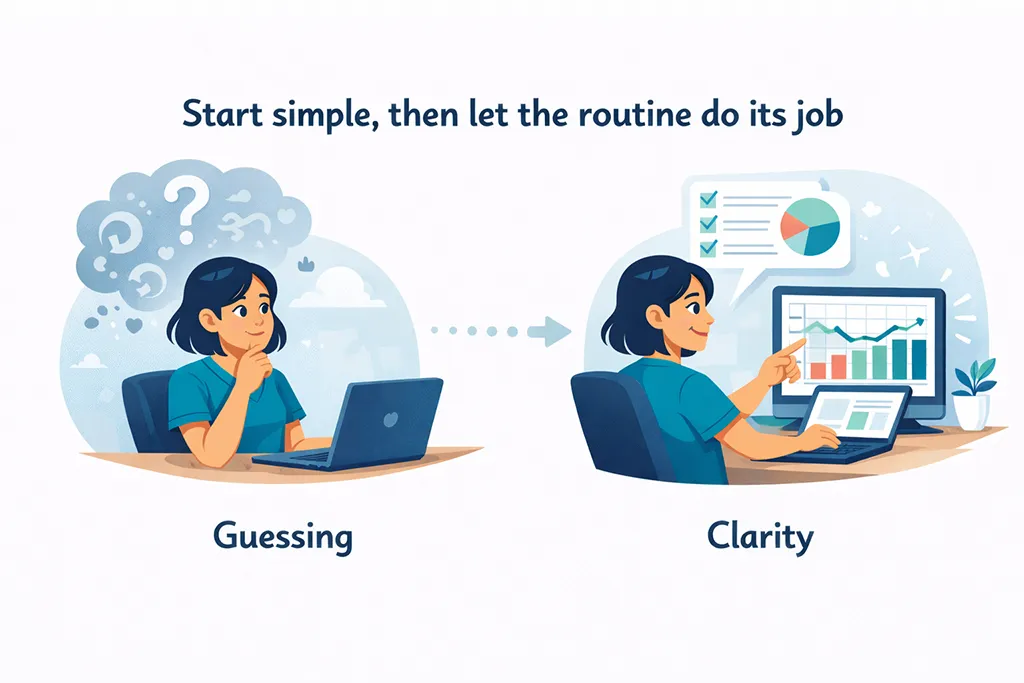
Start simple, then let the routine do its job
The strongest benefit of a weekly money routine is not that it makes you more “on top of things.” It’s that it replaces guessing with clarity. That shift changes how you schedule, price, plan, and protect your energy.
You don’t need a perfect spreadsheet or a dramatic financial reset. You need one simple tracker, one regular check-in, and the willingness to look at what’s true this week.
If you haven’t started yet, set up the simplest version now, paper or digital, and begin with today’s numbers. Then decide what you want the most clarity on next: income, expenses, cancellations, or cash flow. That answer usually tells you where your practice needs the most support.
Please Share
Have you got a question that I haven’t answered here? Drop it in the comments. This space is for sharing, not just reading. Sometimes the best advice comes from those who’ve been in the same shoes.
Let’s build a supportive community where no one has to figure it all out alone. And if this helped you today, consider passing it on to a colleague who might need it – a little support goes a long way.