The 15-Minute Weekly Money Routine (Tiny Bookkeeping for Busy Clinicians)
When you’ve finished your clinic day, it’s likely that the last thing you want to do is look at receipts. It’s natural. Money admin often gets pushed to “later,” right up until tax time arrives and later becomes urgent.
A simple 15-minute weekly money routine can change that. Not because it turns you into a bookkeeping fanatic, but because it keeps cash flow visible, helps you spot problems early, and gives you cleaner numbers to work from.
This isn’t a full finance makeover. It’s a small, repeatable ritual that fits real clinic life, short gaps, full days, and a brain that doesn’t want one more complicated task.
Why this tiny routine makes such a big difference
The main win here is simple: weekly is small enough to do. Two hours once in a while can feel like a looming task. Fifteen minutes feels annoying, perhaps, but possible. And possible is what gets done.
When money admin slips for a few weeks, three problems tend to show up fast:
Tiny weekly checks beat a heroic catch-up session every time.
I made that mistake in my early days. I kept telling myself I only had a few clients and it would be easy to catch up with the finances. Then tax time rolled around and I was spending weekends pulling everything together. A lesson learned for the future.
There are other benefits too. First, facts calm the mind. When your brain doesn’t have numbers, it tends to fill in the blanks, and usually with the worst-case version. A short weekly check gives you real information instead of money guesswork.
Also, clear numbers help with pricing. If your costs are hazy, your fees can end up based on instinct rather than reality. When you know what went out this week, what came in, and what still needs paying, you can make steadier choices. That links closely with setting weekly income targets, because pricing and planning are much easier when the numbers are current.
Finally, a weekly routine protects energy. Money decisions made in a rush are rarely your best ones. A calm, regular check-in gives you a clearer view of the week ahead, which is much nicer than a last-minute scramble with a mug of cold tea and a pile of receipts.
If you’re in the UK as I am, you may also need to be aware of the upcoming new rules on Making Tax Digital. This could have you reporting tax quarterly as well as annually.

Set the system up once
The setup matters, but only because it makes the weekly habit easier. This is a “good enough” job, not a perfect one. You can tidy it later. In fact, that’s often the best way to do it, because perfection is where routines go to die.
Start with the one-place rule
Your money admin needs one home. Not five possible homes, not “somewhere in my bag,” and not “I’ll remember where I put it.” One home.
That could look like this:
A tray works better than a drawer because you can see it. Drawers are where little admin tasks quietly disappear.
The next part is your capture method. If you get a paper receipt, snap it on your phone the same day. If a receipt arrives by email, forward it to your chosen folder right away. The point is to catch it when it appears, not hunt for it later.
Then add one tiny boundary: no receipt goes into the handbag abyss, the car door, or a random kitchen surface. Not even the parking receipt. Straight to the one place, every time.
That one habit removes a surprising amount of friction. It also makes tax deductions easier to track, because you aren’t relying on memory three months later.
I wasn’t bad at filing emailed receipts but I wish I’d had the forethought to snap the paper receipts on my phone. That would have streamlined my system so much more.
Create three money buckets, even if they’re only categories
Once everything has a home, the next step is to sort your money mentally into three buckets. If you only have one bank account right now, that’s fine. These can start as simple categories in your spreadsheet or app.

Here’s the simplest way to think about them:
|
Bucket |
What it covers |
Typical examples |
|---|---|---|
|
Spending |
Business costs that keep the clinic running |
Rent, supplies, software, laundry, insurance, continuing education |
|
Paying yourself |
Your regular draw or transfer |
Personal pay, household living costs |
|
Tax and savings |
Money for tax and a small buffer |
Income tax, sales tax or VAT, small savings reserve |
The key point is that paying yourself is its own bucket. It isn’t whatever happens to be left at the end. Even a small, consistent transfer makes the business feel more stable.
The tax and savings bucket matters for the same reason. It creates a buffer between “money received” and “money available to spend.” Future-you will be grateful.
Pick four tools you’ll actually use
You don’t need fancy software and a color-coded financial dashboard that belongs in a corporate boardroom. You need tools that are easy to open and easy to repeat.
The four basics are straightforward. First, a separate bank account makes life much clearer. In some places, a sole trader can use a personal account for business. In others, the rules differ, so it’s worth checking what applies where you live. If a separate account isn’t possible yet, careful transaction tagging is the next best thing.
Second, use a bookkeeping app or spreadsheet that you will genuinely open. The best tool is the one you don’t avoid.
Third, use simple receipt capture. A phone scan is absolutely fine. Most of us already have our phone within reach, so it often becomes the easiest system to keep.
Fourth, set a repeating calendar appointment for 15 minutes, on the same day and time if you can. End on time. That matters more than it seems. If you tell yourself this takes 15 minutes and then it drifts into 40, your brain will start resisting it next week.
If you want one optional extra, a separate tax savings account can add a lot of calm. Even a small weekly transfer helps.
Your 15-minute weekly bookkeeping routine, minute by minute
Think of this like any other clinic protocol. You follow the same steps each week so your brain doesn’t waste time debating whether to do it, or how to begin.

Minute 1: Set the scene
Keep the start simple. Open only what you need:
Put your phone on Do Not Disturb. This is a short sprint, not a full audit. The goal is to focus for 15 minutes, then get back to the rest of your day.
It’s also better to do this when you’re reasonably fresh. Numbers are more useful when your brain is awake enough to notice what they mean.
Minutes 2 through 5: Clear the money inbox
Next, gather this week’s money items into one place. That includes new phone photos of receipts, emailed supplier invoices, and any paper receipts that haven’t yet been scanned.
This part is mostly about completeness. Do you have receipts for this week’s spending? Are any lab or supplier invoices missing? If something hasn’t arrived, make a quick note to chase it.
The smoother version of this routine happens when receipts get captured as they come in. Still, the weekly check is your safety net. It catches the things that slipped through.
Minutes 5 through 10: Categorize transactions without getting stuck
This is the core bookkeeping step. Match and categorize the week’s transactions. Common categories will probably include rent, supplies, software, merchant fees, laundry, insurance, and CPD or continuing education.
If something is unusual, add a short note. A note like “client refund,” “replacement linen,” or “one-off repair” will save you head-scratching later.
The important rule here is not to stall. If you can’t place a transaction within about 10 seconds, flag it and move on. You can keep a tiny “questions for later” list with items like:
That keeps the routine moving. One unclear transaction shouldn’t derail the whole 15 minutes.

Minutes 10 through 12: Check cash flow at a glance
Now look at the big picture for a moment. Check your bank balance, then look at what still needs to leave the account before you’re paid again.
After that, glance at this week’s income pattern. Did income drop? If so, do you know why? Maybe it was a naturally quiet week. Maybe you worked fewer clinic days. Maybe there were more cancellations than usual.
Also, be careful with packages and prepaid sessions. Money received is not always money earned that week. If a client paid in advance, the cash may have arrived now, but the work may happen later. On the flip side, you may have worked this week and already been paid for it earlier.
That distinction matters because it stops you from getting a false sense of what the week actually produced.
Clear money tracking also helps outside bookkeeping. For example, when your numbers are steady and your caseload patterns are easier to see, it’s often easier to define your niche as a practitioner and build services around the work that fits you best.
Minutes 12 through 14: Make two transfers
If possible, use these two minutes to move money on purpose.
The first transfer is to pay yourself. A regular amount is ideal, even if it isn’t perfect. Consistency matters more than precision here.
The second transfer is for tax and buffer money. The exact amount depends on your local tax setup, but the basic idea is the same. Put aside a percentage now so tax time doesn’t demand the whole amount later.
One example from the UK is setting aside 20 percent of earnings for tax, even before allowing for the personal allowance. That creates a helpful cushion. Depending on your situation, even 10 to 20 percent can make a real difference.
If a transfer isn’t possible in a given week, don’t skip the thought process. Write down what you would have transferred. That keeps the shortfall visible instead of vague.
Minute 14 through 15: Close the loop
The final minute is about making next week easier. Clear one outstanding issue, not ten. That could be one flagged transaction, one missing receipt, or one quick reconciliation task.
Then write one sentence in a running note. Something as plain as “income up, supplies higher, tax transfer done” is enough. Over time, those notes become a very handy pattern tracker.
End on time. You’re building self-trust, not punishment.
That last line matters. A routine works because it stays small and repeatable.
What this weekly routine gives you over time
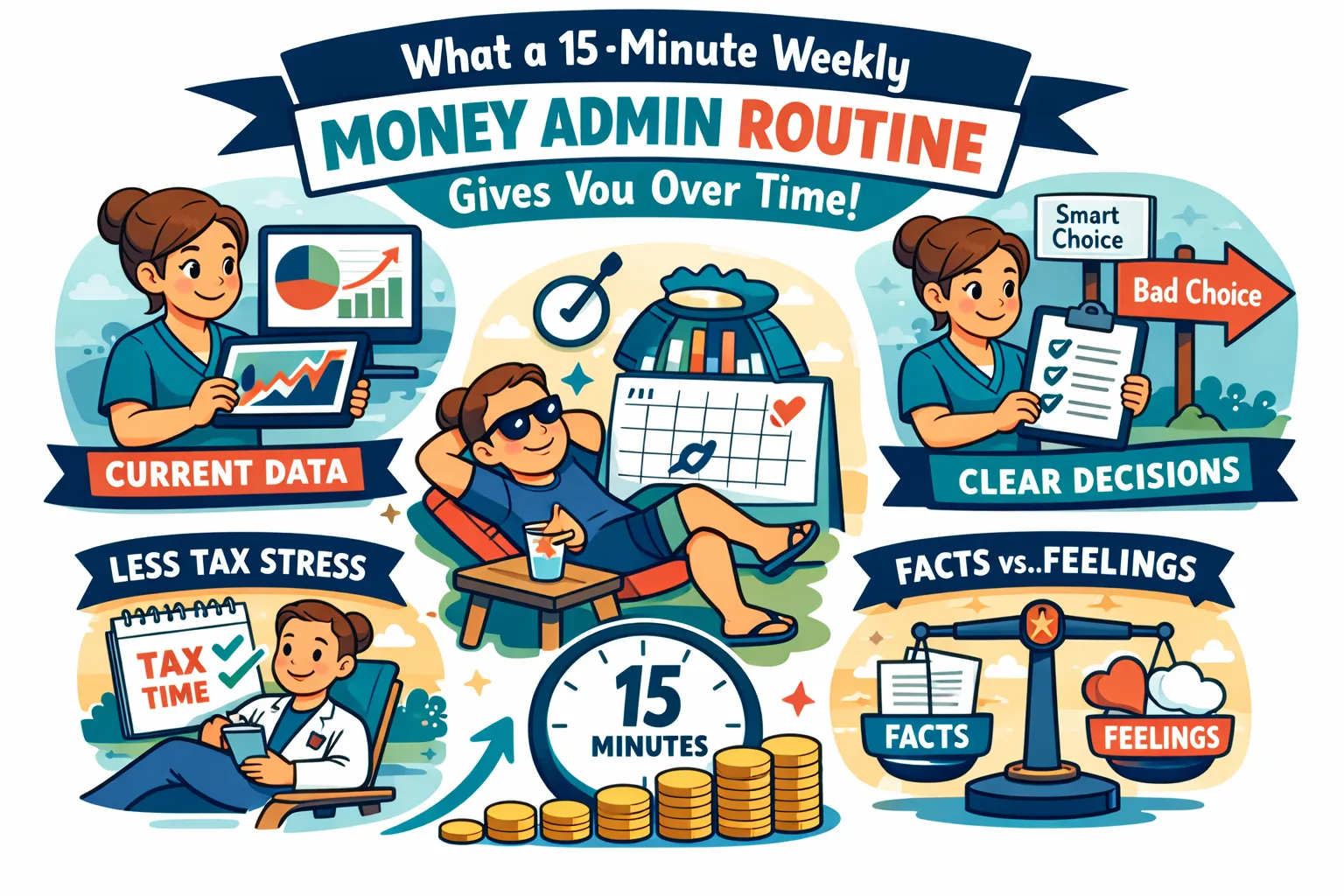
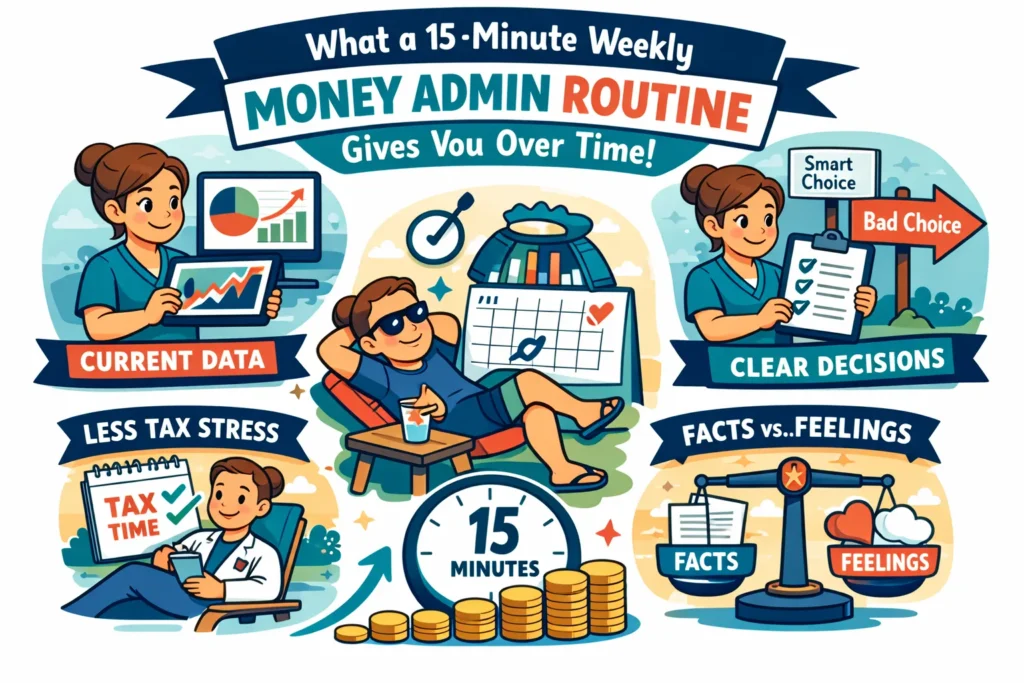
On its own, this 15-minute habit won’t answer every financial question in your practice. It’s not meant to. What it does is create clean, current data, and that’s what makes the next level of decision-making possible.
With a weekly money routine in place, you can spot quiet patches earlier. You can see whether a rise in income actually came with a rise in costs. You can notice whether merchant fees, laundry, or supplies are starting to creep up. You can also go into tax season with far less digging around for documents that should have been captured months ago.
Just as importantly, this routine helps separate facts from feelings. That’s useful when you’re deciding what to charge, how much to pay yourself, or whether a week was truly poor or simply different from the last one.
It also creates the base for tracking a few simple metrics later on. Once the routine is steady, you can build from there. But first, the habit needs to exist.
Make this one small admin habit part of your week
The best version of this routine is the one that happens every week, at the same time, and finishes in 15 minutes. Not perfect, not fancy, just repeatable.
If the setup isn’t done yet, that’s the first step. Create one place for receipts, choose your tools, set your recurring calendar slot, and decide how you’ll handle your three buckets. Then start this week, while the idea is still fresh.
A regular 15 minutes a week won’t do everything, but it will keep your money visible, your records cleaner, and your decisions steadier. That’s a very good return for a quarter of an hour.
Please Share
Have you got a question that I haven’t answered here? Drop it in the comments. This space is for sharing, not just reading. Sometimes the best advice comes from those who’ve been in the same shoes.
Let’s build a supportive community where no one has to figure it all out alone. And if this helped you today, consider passing it on to a colleague who might need it – a little support goes a long way.