Client Acquisition Strategies for Solo Health Practices (That Actually Worked)
If you run a solo clinic, you don’t need a hundred marketing ideas. You need a few simple client acquisition strategies that you can repeat, without turning your week into a marketing project.
The best part is that the same simple moves that bring new people in can also help you keep the good clients you already have. That matters, because a quiet leak out the back door can undo a lot of hard work at the front.
Here are the strategies that worked for me, in a real, hands-on acupuncture clinic setting.
Fix your intake process first (because friction kills bookings)
Before you spend time posting online or dreaming up promotions, fix your intake. It’s your best chance to help a new person become a paying client, and to help an existing client stay with you.
I got more clients after I made it easier for people to become one.
That one change is often bigger than any marketing tactic, because people don’t usually quit because they don’t like you. They quit because the process feels confusing, slow, or full of little delays. And frankly, they’ve already had enough of that from mainstream healthcare.
The intake problems that quietly lose you bookings
A potential client can be interested, motivated, and ready to book, and still drop off if the process is awkward. Common “friction points” include:
If you’ve ever tried to book something online and given up halfway through, you already understand this.
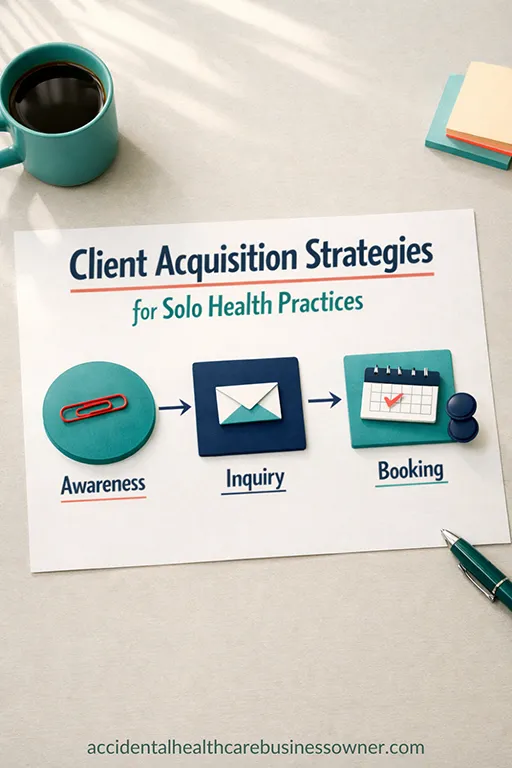
Tighten your “how to book” process
You’re aiming for a clear outcome: make it easy to book, and obvious what happens next.
Here are the practical tweaks that made a difference:
Put your booking link in more places.
If someone has to hunt for it, some of them won’t. Put it where they naturally look, like your website menu, your contact page, and anywhere you talk about appointments.
Reduce the number of forms and steps.
Keep what’s needed, remove what’s “nice to have.” You can always gather extra detail later, once the relationship has started.
Tighten up your forms.
If your form feels long, it probably is. Shorten questions, remove repeats, and make the wording plain.
Send a clear confirmation email.
People feel calmer when they know what happens next (time, date, location, what to bring, and what to expect).
The biggest win: online booking.
When clients can book online, they don’t need to get hold of you first just to find out your availability. They can act the moment they’re ready.
That one shift removes a delay that costs bookings, especially when someone is in pain, worried, or fed up and wants help now.
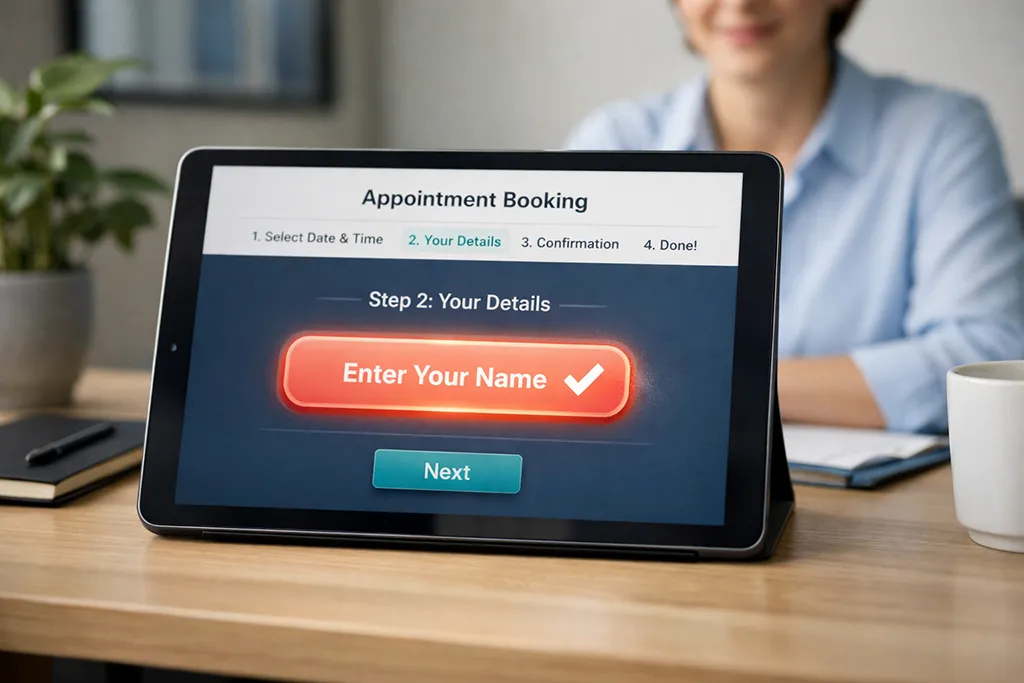
Do this this week: fix one friction point
Keep it small and doable. Pick one friction point and fix it this week.
A few examples you can choose from:
That’s enough to start. You’re not building a masterpiece, you’re removing obstacles.
Use Google Business Profile to get found nearby
If you work in a physical location, you have a huge advantage: people search locally.
They type things like:
Google then shows local results, and your Google Business Profile is often what decides whether you show up, and whether you look trustworthy when you do.
People found me online by googling “acupuncturist near me.”
Set up the basics properly (it matters more than you think)
You don’t need fancy tricks here. You need completeness and clarity.
Make sure your profile includes:
If you’ve ever clicked a listing and thought, “Are they even open?” you know why this matters.
Reviews help, but start with the profile
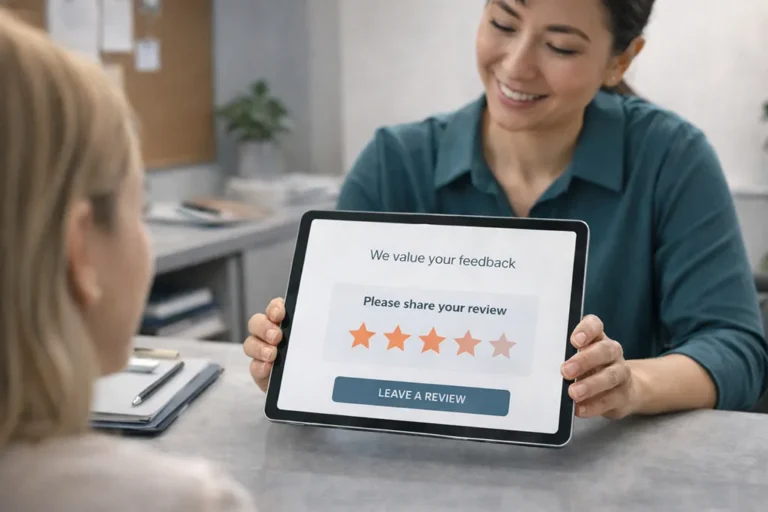
Yes, reviews are helpful, and asking for them is smart. But even before you worry about a perfect review process, get the profile filled out properly.
A complete profile makes it easy for someone nearby to choose you, even if they’ve never heard of you before.
Niche down by simplifying your message (not by shrinking your options)
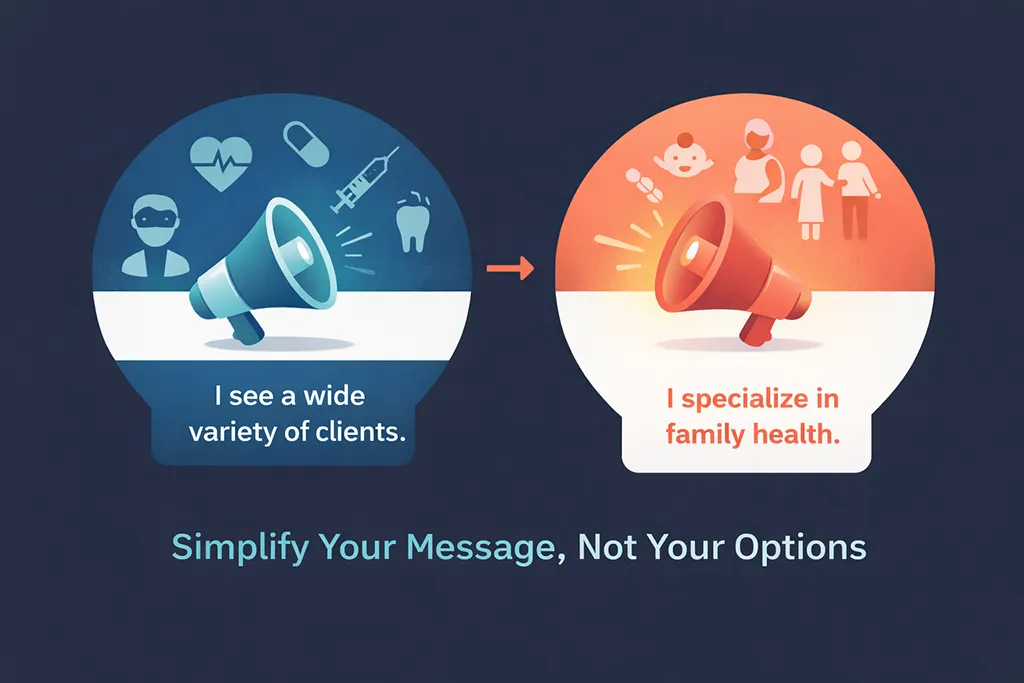
Niching down gets talked about so much that it can start to feel like a rule you’ll get marked down for breaking. It’s not that. It’s just a way to speak clearly.
When you’re too broad, your message turns into a long list of “I can help with… everything,” and people don’t know if you’re for them.
Start broad, then get specific
It’s normal to want to cover all the conditions your modality can help with.
I started out by using lists provided by the British Acupuncture Council.
It can still be useful to have some of that information available on your website, because it reassures people. Most clients want to double check that their issue isn’t completely out of scope.
But here’s the practical truth: if they’re searching locally and you look credible, they’ll often contact you and ask, “Can you help with this?”
Choose who you most want to help
What changes everything is picking:
In my case, the focus became pain management for women over fifty.
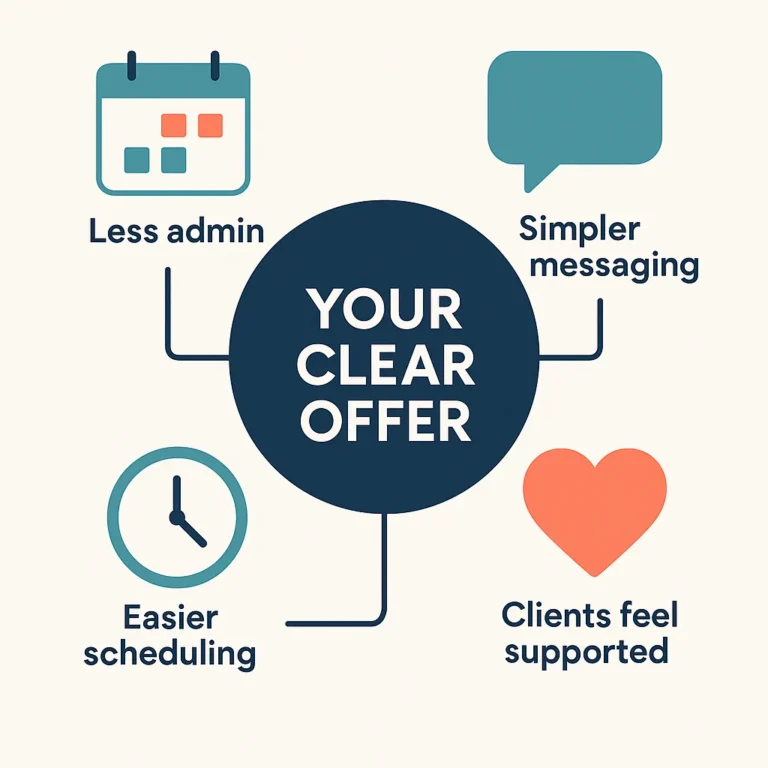
That kind of clarity affects everything in a good way. Your website reads more simply. Your conversations feel more focused. Your new clients know what to expect.
Your first appointment becomes easier to explain
A first appointment for a woman over fifty seeking pain management can look quite different from an athletic 20 to 30-year-old with a gym-related muscle problem.
When you know who you’re talking to, you can describe your process in a way that feels like it was written for them (because it was).
And no, it doesn’t stop other people from booking. People with a problem want a solution, and they also want someone local they can get to without hassle.
Build a referral system into your intake (so it feels normal)
Referrals are still one of the simplest ways to grow a hands-on practice. You just want to make the referral process feel natural, not awkward.
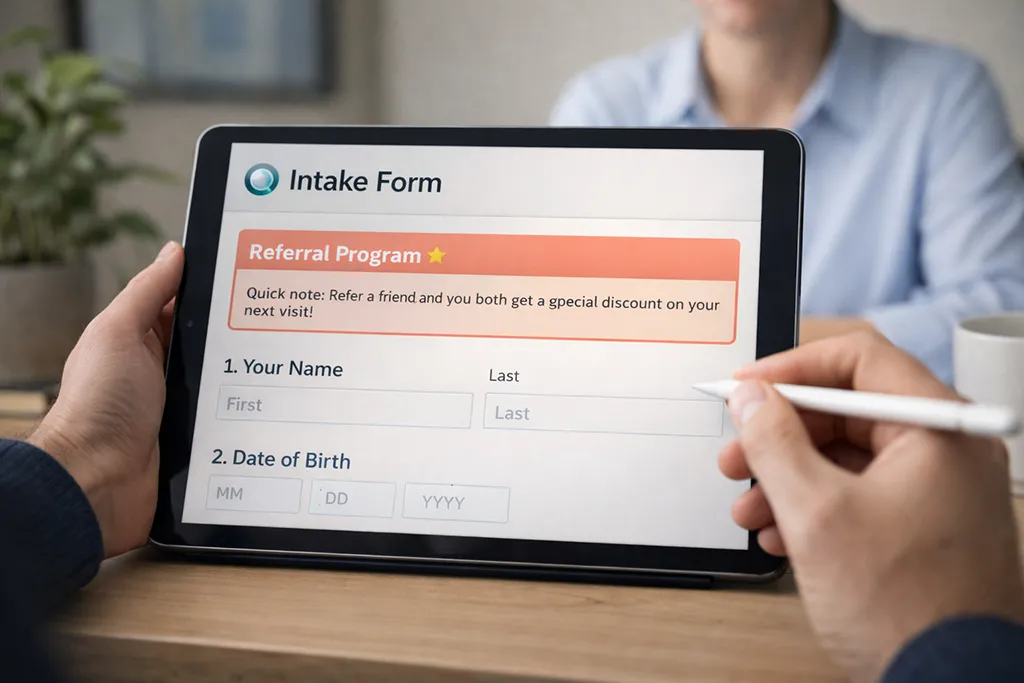
Mention your referral program early
One small thing that helps is to mention your referral program as part of the intake, right at the start of the client relationship.
Not as a big pitch, just as a normal part of “how things work here,” so they know it exists.
Then, you don’t need to bring it up constantly. You can let it sit in the background.
Bring it up again after progress
A good time to mention it again is once you’ve had some success together.
Because I’d already mentioned my referral program in the intake I felt more confident bringing it up again.
You can say something simple like: “If I’ve helped you with this, please tell friends or family who might have the same issue.”
Often, clients will tell you they’ve already mentioned you to someone. That’s your cue to make sharing easy.
Yes, business cards can still work
Handing someone a couple of business cards might sound old-fashioned, but it fits certain client groups really well (especially older clients who don’t spend so much time online).
If your clients are more online, the same idea still applies, you just make it easy in a different format. The principle is the same: don’t make them do extra work to refer.
Treat retention as part of client acquisition
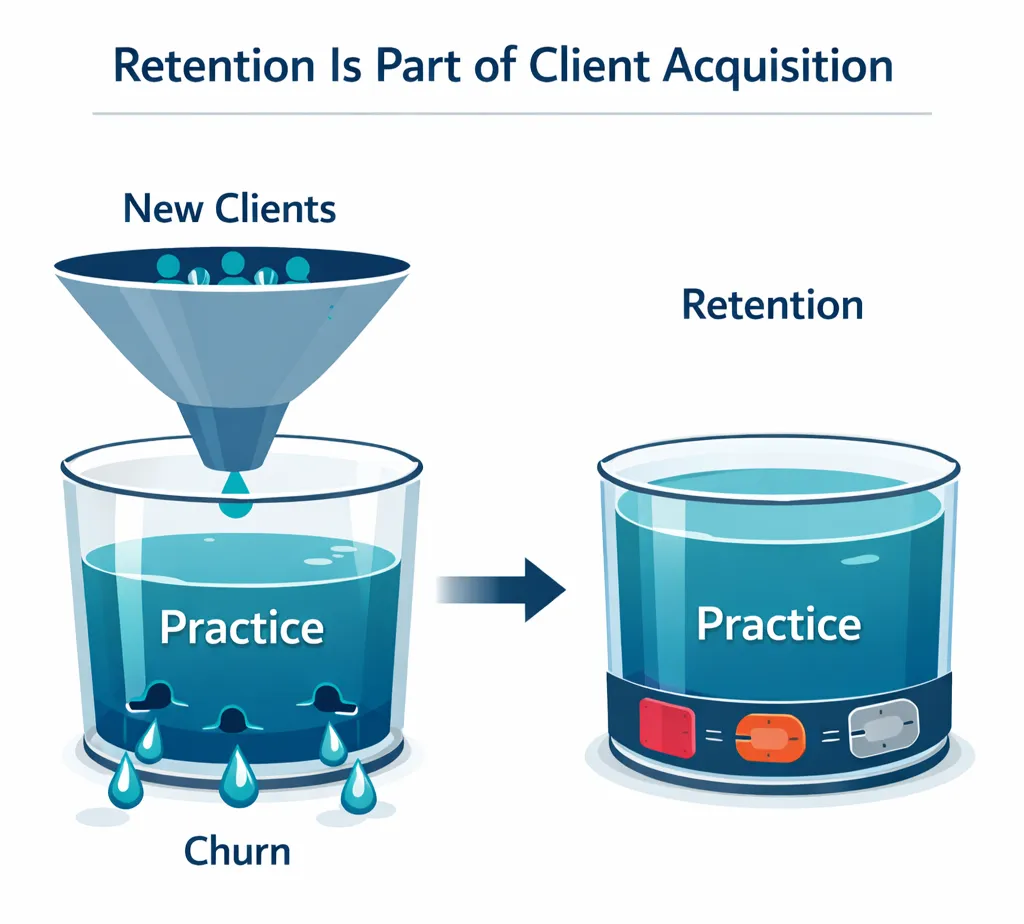
Getting new clients matters. Keeping the right clients matters just as much.
It’s usually cheaper, kinder, and better for the client when they don’t have to start over with someone new.
Most hands-on treatments aren’t a one-and-done situation. People often need a run of sessions to improve, then some maintenance to keep things steady.
If they disappear after the first improvement, it’s common for the problem to return, and then they have to begin again from scratch. That’s frustrating for them, and unpredictable for your diary.
Rebooking inside the session changes everything
Many practitioners feel hesitant about bringing up the next appointment. It can feel pushy, even when it isn’t.
But when you start encouraging the next step while you’re still in the appointment, clients often feel more certain, not less.
You can offer a clear plan, based on where they are in treatment:
You’re not forcing a booking. You’re giving them a sensible next step, while the context is fresh and they’re already thinking about their health.
What if they don’t know their schedule?
If they say they need to check their calendar, that’s fine.
You can keep it light and practical:
As your diary fills, that second sentence becomes more and more true, and clients tend to notice. Many will start bringing a diary or checking their phone so they can book on the spot.
The result is a more stable schedule for you, and a clearer path for them.
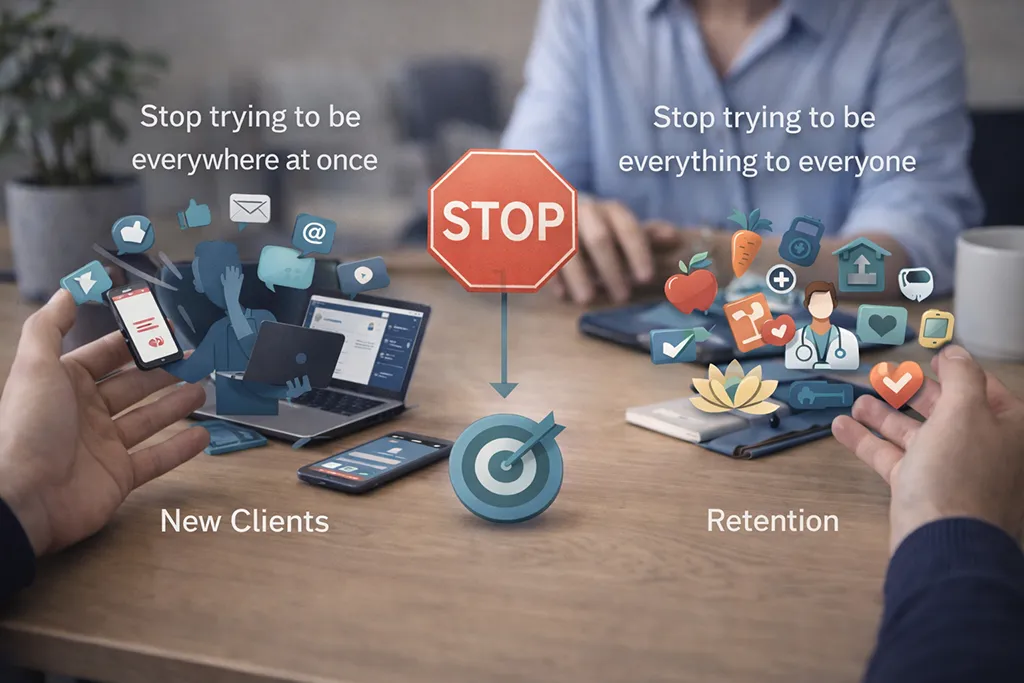
What to stop doing so you can focus
One of the simplest changes you can make is to stop trying to be everywhere at once, and stop trying to be everything to everyone.
When you focus on the people you most want to help, your message gets clearer. Your systems get easier to set up. Your sessions feel more consistent.
You’ll still get enquiries from outside your niche. When you can help, you help. When someone would be better suited elsewhere, you refer them on. Those practitioners often refer back when they meet someone who fits your clinic well.
That kind of professional goodwill tends to come back around.
Pick one strategy and try it this week
You don’t need to do all of this at once. Pick one move that resonates with you and try it this week:
The best client acquisition strategies for solo health practices often look almost boring on paper. They’re simple, local, and repeatable, and they work because they make it easier for real people to choose you and stay with you. Choose one change, do it this week, and notice what shifts when the path to booking becomes easier.
Please Share
Have you got a question that I haven’t answered here? Drop it in the comments. This space is for sharing, not just reading. Sometimes the best advice comes from those who’ve been in the same shoes.
Let’s build a supportive community where no one has to figure it all out alone. And if this helped you today, consider passing it on to a colleague who might need it – a little support goes a long way.
Please pin one of these images to your main business tips board